


VEGETABLE SEEDS

Fennel
FennelFennel belongs to the apiaceae family. The root is white and penetrates to a great depth and the shoot is upright, green and cylindrical. The main part of the plant is its lower part, which is the pseudobulb of the fennel and is basically a thickening of the leaves at their base. The flowers are small and the fruits are 5 mm in diameter, oblong with shades of green and light grey-brown.

Marconi beans
Marconi beansThere are many popular native and traditional bean cultivars, both low and climbing, to choose from. Most growers prefer fresh bean varieties that do not have fiber, as they are more pleasant to eat. We should note that the dry bean varieties have a harder shell and more fiber. Well-known varieties of fresh beans are chauli, terli, broad bean (black-eyed), broad bean (snake bean), mullets (beads), canary beans (yellow beans), bulgara (early mullet), zargana, climbing mullet, while in some regions we will meet other interesting local varieties. An excellent traditional variety of dry beans are the giants of Prespa. It is worth noting that the climbing bean varieties are much more productive than the low varieties, while at the same time they have a longer production period, although they take longer to enter production than the low ones.
Bean cultivation needs fertile soil, rich in organic matter and with good drainage to have good growth and fruiting. When preparing the soil for cultivation, we first plow the field to make the soil sufficiently loose, as it is necessary for the formation of a rich and strong root system of the bean. Then, before planting the bean, we incorporate enough compost, digested manure and organic manure to enrich the soil with organic matter and nutrients.

Borloto beans
Borloto beansThere are many popular native and traditional bean cultivars, both low and climbing, to choose from. Most growers prefer fresh bean varieties that do not have fiber, as they are more pleasant to eat. We should note that the dry bean varieties have a harder shell and more fiber. Well-known varieties of fresh beans are chauli, terli, broad bean (black-eyed), broad bean (snake bean), mullets (beads), canary beans (yellow beans), bulgara (early mullet), zargana, climbing mullet, while in some regions we will meet other interesting local varieties. An excellent traditional variety of dry beans are the giants of Prespa. It is worth noting that the climbing bean varieties are much more productive than the low varieties, while at the same time they have a longer production period, although they take longer to enter production than the low ones.
Bean cultivation needs fertile soil, rich in organic matter and with good drainage to have good growth and fruiting. When preparing the soil for cultivation, we first plow the field to make the soil sufficiently loose, as it is necessary for the formation of a rich and strong root system of the bean. Then, before planting the bean, we incorporate enough compost, digested manure and organic manure to enrich the soil with organic matter and nutrients.

Sage
SageSage is quite a hardy plant and grows in a variety of soils, even dry, barren and stony soils. Sage grows best in sandy, calcareous soils with very good drainage that warm up in early spring. Sage is resistant to both low and high temperatures, meaning we can plant it in hot and cold areas. Prefers places with sun both in the garden and on the balcony.
When planted in the shade, it shows stunted growth and can show rot in the shoots and the root. Incorporating organic matter in the form of digested manure and compost when planting sage is beneficial for its growth.
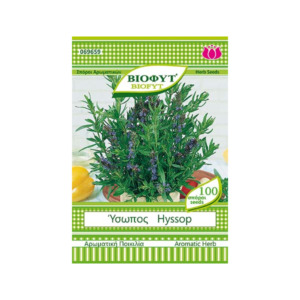
Hyssop
HyssopHyssop is a low shrub that reaches 60 cm in height. Its leaves are lanceolate without a stem and its flowers are dark blue with purple stamens. It has a strong clean and sweet smell with touches of honey aroma. The top note of its essential oil is camphorous and in its middle notes, a warm spice scent lingers as an impression. The color of the essential oil is yellow-green.

Spinach Baby
Spinach BabySpinach needs cool weather and sunny locations to grow and thrive in the fall season. It is also particularly resistant to low winter temperatures. In the spring season, we prefer to plant it in semi-shaded places, as in places with a lot its flowering stem develops prematurely, which stops the vegetation and the production of tender leaves. We plant spinach in fertile, fluffy soil, enriched in nutrients that ensure good growth. Till the soil well before planting and incorporate compost, well-digested manure and complete organic fertilizer.
