


Euphorbia

Euphorbia
Euphorbia lactea cristata, is an easy-to-grow succulent, resulting from the grafting of two species. That is, two plants in one! Its upper part is Euphorbia lactea and its color is silver-grey, which can turn reddish if the plant is happy in its environment. Its lower part is usually Euphorbia neriifolia. Its shape resembles a coral and resulted from a normal mutation of Euphorbia lactea and is also known as Coral plant. Prefer bright spots in the growing area. With gradual acclimatization, it can also live in direct sunlight.
Due to its nature, it does not need frequent watering. Apply watering when the substrate is completely dry, and if you are not sure that it is dry, it is better to leave it for a few more days. In winter, when the plant enters a state of dormancy, watering should be reduced or stopped.
More Products

Basil Red
Basil RedThere are many types and varieties of basil to choose from. We come across hundreds of varieties of basil, others with smaller or larger leaves, with different colors, tastes and aromas. It is important to mention that most varieties of basil are annuals while there are also some perennials. Depending on our preferences, we can choose curly, broad-leaved, Genovese, nightshade, red (purple), saint or tree basil.
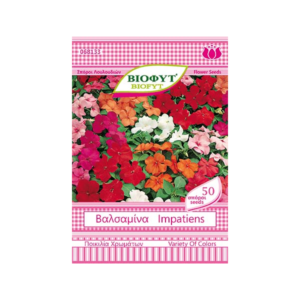
Balsamina
BalsaminaBalsamina is a decorative, small and herbaceous plant of medium growth, with intense foliage and flowers in red and pink shades.
Balsamine (Impatiens balsamine) is also known as balsamine, impatience or love. This plant is preferred for gardens and terraces as it is easy to grow and does not need much care, it has a characteristic multi-month flowering and makes the most of shady places. The planting of the balsamina should be done in shady places and not have direct contact with the sun’s rays. In combination with plenty of water, the balsamina blooms both on the branches and throughout its central trunk.
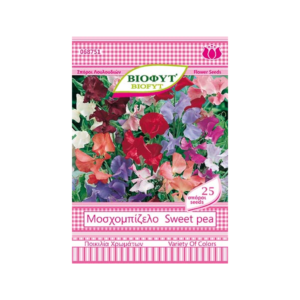
Sweet pea
Sweet peaSweet pea (Lathyrus odoratus, Fabaceae) is a genus of perennial and annual climbing plants native to the south-eastern Mediterranean, Italy, southern France and Greece. The musk pea Lathyrus odoratus is a genus of over thirty perennial and annual aromatic climbing plants, and belongs to the Fabaceae family. It is an annual climbing or erect plant with a height of 60-180 cm and a width of 40-80 cm. The leaves are grey-green, oval 5-7cm long, some have been formed into tendrils for climbing the plant. The flowers of the plant are large, fragrant, butterfly-shaped and grow many together in groups. Creates a rich and deep root system.

Four o’clock Flower
Four o’clock FlowerAn ornamental plant even for its leaves. Flowers open on cloudy days. For cultivation, in groups or individually. It is 70 cm tall. It appreciates fresh soil, but be well drained, fertile soils, neutral to alkaline.

Sweet Violet
Sweet VioletSweet Violet is a small, decorative plant, originally from Europe. Famous for the intoxicating scent of its purple and white flowers, it blooms late into winter and is surprisingly suitable for small gardens. Resistant to the cold and lively all year round, it can even be used as a ground cover, under rose bushes or ornamental shrubs.

Zinnia Giant
Zinnia GiantZinnia is an annual ornamental plant that impresses with the variety of colors and shapes of its flowers. The zinnia has upright strong shoots with a length of half to one meter and large flowers that remain in bloom throughout the summer. We can find tall and short varieties of zinnia and plant them in a pot but also in a rock garden, on the lawn, and in flower beds, in various combinations with other herbaceous flowering plants.
