


Brussels sprout

Brussels sprout
Before planting cabbage, the field is cleared of weeds and hard materials such as stones and wood. Cabbage benefits from residues of old crops. So if in the field, there was a previous crop without disease attacks, the residues can, instead of being destroyed, be incorporated into the soil. If it is being installed for the first time, the ground is leveled and plowed or dug to a sufficient depth (30-40cm) to improve aeration and fluff up the soil. 1-2 months before planting the crop, compost or well-digested manure is incorporated into the soil, by milling or carving.
As with other crucifers, this species also needs to maintain uniform soil moisture for this and may need watering even in winter. In general, water needs increase with plant growth. Watering is necessary during the formation of the heads, otherwise there is a risk of the heads bursting. Regardless of water needs, good drainage of the soil is also needed to ensure good aeration of the roots
More Products

Strawberry
StrawberryStrawberry, the favorite fruit of young and old with its unique juicy taste. The best way to enjoy the most delicious strawberries, full of rich aroma, is to grow our own strawberries in the garden or on the balcony. Strawberries are very healthy and have significant nutritional value. They are rich in vitamin C, potassium, phosphorus and calcium, while at the same time they offer significant antioxidant activity. Strawberries are the ideal fruit for novice gardeners of all ages, as they don’t require too much care, can be grown in a pot or in a flower bed, and each plant gives us enough fruit. The strawberry plant is a perennial and herbaceous that spreads on the ground and climbs. The strawberry has a central stem, of low height, from which the leaves, flowers and fruits that are formed in spring and summer emerge. Strawberry cultivation lasts about 3-4 years before the productivity of the plants starts to decrease significantly and we will have to replace the crop by planting new strawberry plants to ensure new strawberry plants.

Chicory
ChicoryWhat are the most popular radish varieties to grow? There are many species and varieties of radish to choose from and grow. First, the wild radish with its bitter taste and characteristic green jagged leaves that turn red at the base. Stamnagathi is also a variety of wild radish. And then there is the tame radish with the upright, wider leaves, lighter at the base and with less bitterness. Also, the Italian radish with its upright toothed leaves, spicy bitter taste and many harvests. Let’s not forget radicchio, the radish variety with crimson leaves and white nerves that close like lettuce leaves. Radizio has a strong spiciness when eaten raw that fades with cooking. Radish is a horticultural plant that loves the cold environment and that is why it is planted in the autumn season when we have low temperatures, humidity and few hours of daily sunshine. After all, at high temperatures, the radish blooms prematurely and is unsuitable for consumption. We plant radishes in sunny or semi-shady places and we prefer rich, fertile and cool soils that ensure good drainage. If we plant in the ground, we incorporate organic matter in the form of compost and digested manure for better root development. To plant it in a pot, we use potting soil special for horticulture, rich in organic matter and nutrients, and place the pot on a balcony with western or eastern exposure for the radish culture to thrive.
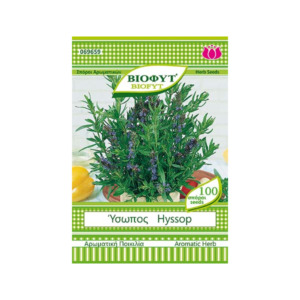
Hyssop
HyssopHyssop is a low shrub that reaches 60 cm in height. Its leaves are lanceolate without a stem and its flowers are dark blue with purple stamens. It has a strong clean and sweet smell with touches of honey aroma. The top note of its essential oil is camphorous and in its middle notes, a warm spice scent lingers as an impression. The color of the essential oil is yellow-green.

Cabbage Chinese
Cabbage ChineseCabbage is a cold season plant and the ideal temperature for its growth is 15-18 degrees Celsius. Cabbages are planted mainly in sunny positions in the fall, although semi-shaded positions are useful in early summer plantings when it is very hot. Cabbage can grow in all types of soil, except very acidic soils. It is important that the soil has good drainage to remove excess water from watering and to ensure good aeration of the roots. For early cabbages we prefer sandy, light warm soils, while for late cabbages we prefer heavier and more fertile soils with good drainage, rich in organic matter. 3. How do we plant the cabbages and at what distances? We can raise cabbage plants from seed to maintain traditional varieties or keep our own seeds from the plants every year. Planting in a nursery takes 4-6 weeks until the young plants are ready for transplanting in the field. Ideal temperatures for seed germination and plant growth are 15-20 degrees Celsius. Alternatively, we can get ready-made cabbage plants from agricultural stores and nurseries in our area. Cabbage is transplanted from mid-August to early November depending on the growing conditions in each region.

Celery aromatic
Celery aromaticCelery varieties, depending on the part of the plant for which they are grown, are divided into two main categories: a) leafy ones that have rich foliage vegetation and b) rhizomes that have less growth of the above-ground part of the plant and more root growth. The best-known varieties are the traditional variety of celery, the variety of celery and the variety of celeriac, which have the following characteristics: Common variety of celery: Traditional local leafy variety of celery with thin stems and leaves that have a strong aroma and taste Celery variety: Classic leafy variety of celery with thick crisp stems that reach a height of up to one meter and large leaves but not as strongly scented as the common variety. Celery root variety: Characteristic variety of root celery eaten for its large round root, fresh or cooked in salads and soups.

