


Mesembryanthemum

Mesembryanthemum
Mesembryanthemum is an evergreen succulent with creeping growth and green trifoliate leaves. It blooms in spring and summer, with yellow flowers. Plant ideal for ground cover and very resistant in barren or stony soils and in coastal planting sites. Evergreen, creeping succulent with large three-lobed leaves and whitish, yellow or fuchsia flowers depending on the variety. Ideal for ground cover, sloping soils, rock gardens and dry heat conditions. Flowering period Spring to Autumn. It is easily propagated by cuttings and offshoots without rooting hormone. It can withstand without any water for long periods of time. Our company also has the heart-leaved bush with a red small flower that blooms more in the summer. It is also a creeping plant for flower beds and rock gardens. There is also the Mesembryanthemum shrub with tall long narrow leaves in various colors (pink, fuchsia orange). When it blooms in Spring it becomes a beautiful round flower ball, ideal for pots and planters.
Ideal for ground cover, sloping soils, rock gardens and dry heat conditions. Flowering period Spring to Autumn. It is easily propagated by cuttings and offshoots without rooting hormone.
More Products

Pepper Decorative
Pepper DecorativePeppers, the vegetable with the unique taste and the most colors than any other vegetable! Peppers are a key ingredient of Mediterranean cuisine, combining a unique taste, crunchy texture and characteristic aroma. The pepper crop reaches a height of about 1 meter and, depending on the variety, forms fruits in various shapes, from oblong to rounder with bright colors such as green, yellow, orange and red. The fruit of the pepper has a very important nutritional value as it contains many vitamins and antioxidants, very beneficial for our health. At the same time, it has a low fat content and is therefore suitable for weight loss diets. The pepper plant belongs to the same family as the tomato and eggplant, the Solanaceae family, and they are native to Central and South America. Pepper cultivation usually begins in the spring. It is a relatively easy crop that with proper care gives us many fruits to enjoy in the summer. And if we don’t have space available in the garden, we can grow peppers in pots on the balcony or in our yard.
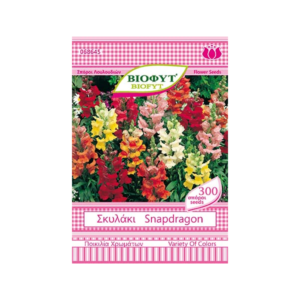
Snapdragon
SnapdragonThe Snapdragon, a favorite ornamental plant with wonderful flowers, is planted in the spring and is a characteristic plant of the Mediterranean, with rich vegetation. We will find Snapdragon in dwarf varieties from 20-40 cm, medium height from 40-60 cm and tall varieties from 60-120 cm. Although a perennial plant, it is usually planted as an annual in gardens and in pots on the balcony to give us rich flowering and impressive color combinations.

Sunflower Bicolor
Sunflower BicolorThe sunflower, the well-known sunflowers, is a favorite summer plant to decorate our garden or balcony to give us its impressive flowering. The name of the sunflower comes from the fact that its head constantly turns towards the sun’s rays during the day and turns again, in the morning hours, towards the east. The dwarf varieties of sunflower, which reach up to 40-50 cm in height, are suitable for pots, while for the garden we prefer the taller varieties that exceed one meter and are also edible. The characteristic color of sunflower flowers is yellow but now new sunflower varieties have been created in shades from pale yellow to red and brown.

Passiflora
PassifloraPassiflora, the flower of passion that impresses with its distinctive shape. Passiflora is a climbing plant that grows very quickly and is a beautiful way to cover fences and pergolas. The impressive flower of the passionflower resembles the shape of a clock, which is why in several regions of our country it is known as a clock. Passiflora is native to South America. It can reach a growth of up to ten meters and gives us its wonderful flowering in the summer. There are hundreds of species of Passiflora, most climbing, although there are also some shrubs and trees among them. A well-known species of Passiflora (Passiflora edulis) is our well-known Passion fruit, whose fruits are eaten.
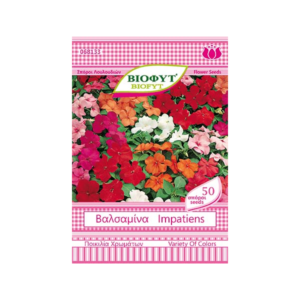
Balsamina
BalsaminaBalsamina is a decorative, small and herbaceous plant of medium growth, with intense foliage and flowers in red and pink shades.
Balsamine (Impatiens balsamine) is also known as balsamine, impatience or love. This plant is preferred for gardens and terraces as it is easy to grow and does not need much care, it has a characteristic multi-month flowering and makes the most of shady places. The planting of the balsamina should be done in shady places and not have direct contact with the sun’s rays. In combination with plenty of water, the balsamina blooms both on the branches and throughout its central trunk.

