


SEEDS and BULBS
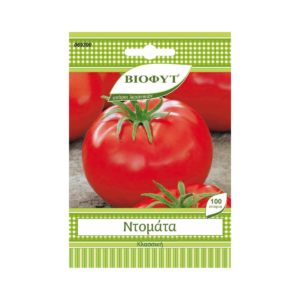
Tomato Classic
Tomato ClassicTomato cultivation needs enough sunshine to grow and give us delicious juicy tomatoes. We choose sunny spots in our garden and avoid shady spots or spots near trees. How we improve the soil, soil preparation for cultivation When planting the tomato we incorporate enough organic matter into the planting holes, in the form of compost and well-digested manure, as well as organic fertilizer rich in potassium. In this way, we enrich the soil with nutrients and at the same time make it fluffier with better drainage for water. In loose soil, the roots of the tomato plant go further into the soil and have greater growth. Thus, the plant has better support and richer vegetation lays the foundations for higher and better quality production during cultivation. We plant the tomato plants at the appropriate planting distances, depending on the variety of tomato, the soil and the climatic conditions. We avoid dense plantings and prefer to plant relatively sparsely for better production and healthier plants. The bush tomato varieties are planted at distances of 0.70 – 1 meter between the plants and 1.5-2 meters between the planting lines, to ensure the best ventilation and lighting of the plants. Climbing varieties of tomatoes are planted closer, at distances of half a meter. We can use geotextile ground cover to limit the growth of unwanted weeds during cultivation and help our plants grow better.
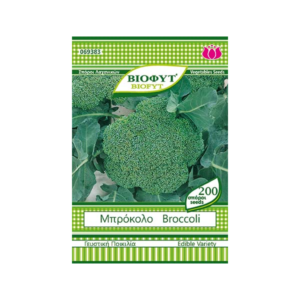
Broccoli
BroccoliBroccoli is a cool season plant and needs a cool environment to thrive. Ideal temperature for the growth of the broccoli floret is between 15-20 degrees Celsius. Broccoli grows best in sunny positions and gives us abundant production. If we plant broccoli in a semi-shaded position, their ripening is significantly delayed. Regarding the soil, broccoli grows best in cool and fertile soils with good drainage, while it does not thrive in very acidic and alkaline soils. Before planting broccoli, we can improve soil fertility by adding organic matter by incorporating manure and compost into the soil. Broccoli is planted from the beginning of August to the end of October, depending on the variety and the climatic conditions of the area we cultivate. To create new broccoli plants from seed, we need 6-7 weeks until they are transplanted to their final growing sites. Ideal temperatures for seed germination and plant growth are between 20-25 degrees Celsius. Sowing is carried out in early autumn.
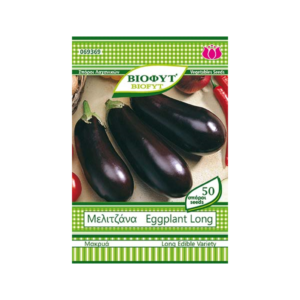
Eggplant Long Sweet
Eggplant Long SweetEggplant cultivation grows best in areas with a warm climate. It is worth mentioning that the eggplant needs more heat than the tomato crop and the pepper crop, as well as being much more sensitive to low temperatures and frost. Eggplant planting takes place from April onwards, when the temperature has risen noticeably. Eggplant grows in loose, fertile soils that have good drainage to remove excess water. When preparing the soil for cultivation and before planting the eggplant, we plow the garden and incorporate enough organic matter into the planting pits in the form of compost and digested manure, as well as complete organic fertilizer. Eggplant cultivation has several nutrient needs in order to thrive and it necessarily needs fertilization. To enjoy sweet eggplants, we add every 3-4 weeks a complete organic fertilizer fortified with potassium that helps to produce quality and tasty fruits so that they do not become bitter.
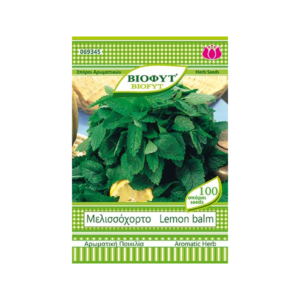
Lemon balm
Lemon balmLemon balm is a shrubby aromatic plant found in the region of Southern Europe, the Mediterranean, and Central Asia. Also known as bee herb, lemon balm or “medicine bee”, Lemon balm is fast growing and usually over a meter tall. The leaves of Lemon balm are oval and jagged and give off a mild lemon scent. Lemon balm grows in a variety of soils, although it prefers cool and fertile soils, as long as they are well drained and it prefers sunny positions. It is a plant resistant to high temperatures, however, Lemon balm is relatively sensitive to very low temperatures and freezing temperatures. Because of its fast and dynamic growth, Lemon balm is best planted alone in the pot, while when planted in rock gardens, we choose it in the rear plantings at a distance of at least half a meter from the other aromatic plants.

Lettuce Romana
Lettuce RomanaLettuce is planted in the garden, in pots or planters on the balcony, and lettuce can also be grown in a greenhouse. As a cool season plant, lettuce needs a cool environment and is grown at relatively low temperatures between 14-19°C. In general, it prefers sunny planting locations, although it also grows satisfactorily in semi-shaded locations. At high temperatures, premature growth of the flowering shoot of the lettuce is caused, while at very low temperatures and frost, burns are caused on the foliage. Some varieties of lettuce are more resistant to the relatively high temperatures of spring and others are better adapted to the frost of winter. For planting lettuce, the ideal soil is fertile, cool, with a high content of organic matter that ensures good drainage.

Lettuce Ortolani
Lettuce OrtolaniLettuce is planted in the garden, in pots or planters on the balcony, and lettuce can also be grown in a greenhouse. As a cool season plant, lettuce needs a cool environment and is grown at relatively low temperatures between 14-19°C. In general, it prefers sunny planting locations, although it also grows satisfactorily in semi-shaded locations. At high temperatures, premature growth of the flowering shoot of the lettuce is caused, while at very low temperatures and frost, burns are caused on the foliage. Some varieties of lettuce are more resistant to the relatively high temperatures of spring and others are better adapted to the frost of winter. For planting lettuce, the ideal soil is fertile, cool, with a high content of organic matter that ensures good drainage.
