


Lemon balm

Lemon balm
Lemon balm is a shrubby aromatic plant found in the region of Southern Europe, the Mediterranean, and Central Asia. Also known as bee herb, lemon balm or “medicine bee”, Lemon balm is fast growing and usually over a meter tall. The leaves of Lemon balm are oval and jagged and give off a mild lemon scent. Lemon balm grows in a variety of soils, although it prefers cool and fertile soils, as long as they are well drained and it prefers sunny positions. It is a plant resistant to high temperatures, however, Lemon balm is relatively sensitive to very low temperatures and freezing temperatures. Because of its fast and dynamic growth, Lemon balm is best planted alone in the pot, while when planted in rock gardens, we choose it in the rear plantings at a distance of at least half a meter from the other aromatic plants.
Lemon balm, in the first stages of growth, will need small and frequent waterings to take root better, while then frequent watering will be required during the summer season. As far as fertilization is concerned, the incorporation of a small amount of organic nitrogen fertilizer or manure, twice in the spring period is imperative.
More Products

Spinach Virofly
Spinach ViroflySpinach needs cool weather and sunny locations to grow and thrive in the fall season. It is also particularly resistant to low winter temperatures. In the spring season, we prefer to plant it in semi-shaded places, as in places with a lot its flowering stem develops prematurely, which stops the vegetation and the production of tender leaves. We plant spinach in fertile, fluffy soil, enriched in nutrients that ensure good growth. Till the soil well before planting and incorporate compost, well-digested manure and complete organic fertilizer.

Spinach Baby
Spinach BabySpinach needs cool weather and sunny locations to grow and thrive in the fall season. It is also particularly resistant to low winter temperatures. In the spring season, we prefer to plant it in semi-shaded places, as in places with a lot its flowering stem develops prematurely, which stops the vegetation and the production of tender leaves. We plant spinach in fertile, fluffy soil, enriched in nutrients that ensure good growth. Till the soil well before planting and incorporate compost, well-digested manure and complete organic fertilizer.

Cucumber mini
Cucumber miniThere are dozens of cucumber varieties and hybrids that are commercially available and that we can plant. Depending on the size of the fruit, the cucumber varieties are divided into the large-fruited varieties and the small-fruited varieties that, in addition to being fresh, are also used for pickling. A traditional long-fruited variety of cucumber is the Kalybiotiko cucumber, suitable for summer outdoor cultivation that gives very tasty smooth dark green fruits, about 40 cm long. Among the small-fruited varieties, we distinguish the Knossos variety, from the Heraklion region of Crete, with a smooth, dark green, crunchy fruit about 20 centimeters long. Long cucumber, a traditional variety of cucumber.

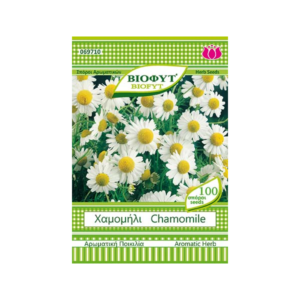
Chamomile
ChamomileChamomile, the beautiful plant with its characteristic aroma and unique beneficial properties. Chamomile is a favorite herb found naturally in the Greek countryside and often picked to be enjoyed as a relaxing tea. All of us chamomile fans can grow it in the garden, as well as in a pot in our yard or balcony, to make wonderful drinks at home. Chamomile is a low-growing, low-maintenance herbaceous plant that is extremely easy to grow. In addition to the beneficial properties it has at our disposal and our health, chamomile also has a special decorative value due to the impressive numerous small flowers with white petals and a characteristic yellow color in the center of the flower that resemble small daisies. There are 2 main varieties of chamomile, the German or wild chamomile, an annual or biennial plant that is taller and the Roman or tame or garden chamomile that is shorter growing and perennial. Let’s see what care chamomile needs to grow it in the garden and in a pot on our balcony and to enjoy beautiful flowers and healthy drinks at home.

Anise
AniseThis small taxon is represented by evergreen trees and shrubs distributed in North America, Mexico, Peru, the West Indies and eastern Asia, with the highest concentration of species occurring in northern Myanmar and southern China.
The best known member of this genus is probably Illicium verum. Other species of this genus are Illicium anistatum, Illicium parviflorum, Illicium angustisepalum A.C. and other.
