


Mesembryanthemum

Mesembryanthemum
Mesembryanthemum is an evergreen succulent with creeping growth and green trifoliate leaves. It blooms in spring and summer, with yellow flowers. Plant ideal for ground cover and very resistant in barren or stony soils and in coastal planting sites. Evergreen, creeping succulent with large three-lobed leaves and whitish, yellow or fuchsia flowers depending on the variety. Ideal for ground cover, sloping soils, rock gardens and dry heat conditions. Flowering period Spring to Autumn. It is easily propagated by cuttings and offshoots without rooting hormone. It can withstand without any water for long periods of time. Our company also has the heart-leaved bush with a red small flower that blooms more in the summer. It is also a creeping plant for flower beds and rock gardens. There is also the Mesembryanthemum shrub with tall long narrow leaves in various colors (pink, fuchsia orange). When it blooms in Spring it becomes a beautiful round flower ball, ideal for pots and planters.
Ideal for ground cover, sloping soils, rock gardens and dry heat conditions. Flowering period Spring to Autumn. It is easily propagated by cuttings and offshoots without rooting hormone.
More Products

Carnation Pink
Carnation PinkCarnations, one of the classic and much-loved flowers that are traditionally found in the gardens, yards and balconies of Greek homes. The carnation (carnation or dianthus) stands out for its lush vegetation with its characteristic elongated lance-shaped leaves and its rich flowering in impressive colors. There are single color carnation varieties in shades of pink, red, yellow and white, as well as bicolor carnations with wonderful color combinations. This is an extremely popular ornamental plant that, especially in previous decades, was not missing from any home. After all, the carnation has been cultivated since ancient times and was known by the name Dianthos, which means the flower of Zeus. The carnation is planted in the spring and gives us the rich flowering from April to November.

Sweet Violet
Sweet VioletSweet Violet is a small, decorative plant, originally from Europe. Famous for the intoxicating scent of its purple and white flowers, it blooms late into winter and is surprisingly suitable for small gardens. Resistant to the cold and lively all year round, it can even be used as a ground cover, under rose bushes or ornamental shrubs.


Basil Red
Basil RedThere are many types and varieties of basil to choose from. We come across hundreds of varieties of basil, others with smaller or larger leaves, with different colors, tastes and aromas. It is important to mention that most varieties of basil are annuals while there are also some perennials. Depending on our preferences, we can choose curly, broad-leaved, Genovese, nightshade, red (purple), saint or tree basil.

Pepper Decorative
Pepper DecorativePeppers, the vegetable with the unique taste and the most colors than any other vegetable! Peppers are a key ingredient of Mediterranean cuisine, combining a unique taste, crunchy texture and characteristic aroma. The pepper crop reaches a height of about 1 meter and, depending on the variety, forms fruits in various shapes, from oblong to rounder with bright colors such as green, yellow, orange and red. The fruit of the pepper has a very important nutritional value as it contains many vitamins and antioxidants, very beneficial for our health. At the same time, it has a low fat content and is therefore suitable for weight loss diets. The pepper plant belongs to the same family as the tomato and eggplant, the Solanaceae family, and they are native to Central and South America. Pepper cultivation usually begins in the spring. It is a relatively easy crop that with proper care gives us many fruits to enjoy in the summer. And if we don’t have space available in the garden, we can grow peppers in pots on the balcony or in our yard.
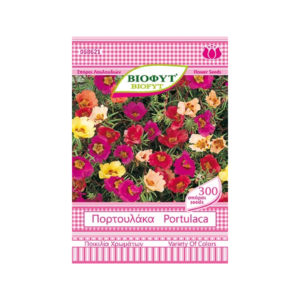
Portulaca
PortulacaPortulaca, also known as silk, is an annual ornamental plant ideal for ground cover in rock gardens, but also for planting in hanging pots on the balcony. Portulaca originates from Brazil and is characterized by creeping vegetation and fleshy oval leaves. The impressive flowering of purslane lasts from spring to autumn, with single or double flowers, monochrome, two-color and even three-color, in shades of yellow, pink, orange, red and white. Portulaca has no particular soil requirements, although it prefers fertile soils with good drainage.
