


Cucumber

Cucumber
Cucumber is a thick, ground-growing annual vine that grows on scaffolding or any other supporting framework, wrapping thin, spiraling stems around the nerve. The plant has large, spiny, hairy triangular leaves that form a canopy over the fruits, and yellow flowers that are mostly either male or female. Female flowers are identified by the swollen ovary at the base, which will become the edible fruit.
The fruit: Botanically, the fruit is a false berry or gourd, elongated and with a rounded triangular shape. Size, shape and color vary by variety. The fruit cavity (three points) contains soft tissue (placenta) in which the seeds are embedded. The regular cucumber bears true seeds (seeded cucumber), while the English cucumber bears neither seeds (seedless cucumber) nor indistinct atrophied seeds. Normal cucumbers are small (about 15-25 cm) and uniformly cylindrical. Their thick, deep green skin has light green stripes and a rough surface with strong hairs. The skin is bitter in taste and not easily digested, so the fruits must be peeled before eating. English cucumbers are long (about 25-50cm) and cylindrical, with a small, narrow neck at the end of the stem. Their rather smooth surface has slight wrinkles and ridges. The thin skin is uniformly green and not bitter, so the fruits should not be peeled before eating. The fruit of cucumbers, like other Cucurbitaceae, is characterized by a high water content, which is about 95% of its fresh weight.
More Products

Spinach Baby
Spinach BabySpinach needs cool weather and sunny locations to grow and thrive in the fall season. It is also particularly resistant to low winter temperatures. In the spring season, we prefer to plant it in semi-shaded places, as in places with a lot its flowering stem develops prematurely, which stops the vegetation and the production of tender leaves. We plant spinach in fertile, fluffy soil, enriched in nutrients that ensure good growth. Till the soil well before planting and incorporate compost, well-digested manure and complete organic fertilizer.

Chicory
ChicoryWhat are the most popular radish varieties to grow? There are many species and varieties of radish to choose from and grow. First, the wild radish with its bitter taste and characteristic green jagged leaves that turn red at the base. Stamnagathi is also a variety of wild radish. And then there is the tame radish with the upright, wider leaves, lighter at the base and with less bitterness. Also, the Italian radish with its upright toothed leaves, spicy bitter taste and many harvests. Let’s not forget radicchio, the radish variety with crimson leaves and white nerves that close like lettuce leaves. Radizio has a strong spiciness when eaten raw that fades with cooking. Radish is a horticultural plant that loves the cold environment and that is why it is planted in the autumn season when we have low temperatures, humidity and few hours of daily sunshine. After all, at high temperatures, the radish blooms prematurely and is unsuitable for consumption. We plant radishes in sunny or semi-shady places and we prefer rich, fertile and cool soils that ensure good drainage. If we plant in the ground, we incorporate organic matter in the form of compost and digested manure for better root development. To plant it in a pot, we use potting soil special for horticulture, rich in organic matter and nutrients, and place the pot on a balcony with western or eastern exposure for the radish culture to thrive.

Oregano
OreganoOregano does not have special soil requirements, as long as it has very good drainage to remove water. It is cultivated, even in very poor, dry and stony soils. Oregano gives us lush vegetation and flowering when planted in sunny positions. It is resistant to heat during the summer and relatively resistant to frost in winter. To plant oregano in a pot, place it on a west or south facing balcony. For planting in a rock garden, oregano pairs well with marjoram and thyme, which have similar care requirements.

Celery aromatic
Celery aromaticCelery varieties, depending on the part of the plant for which they are grown, are divided into two main categories: a) leafy ones that have rich foliage vegetation and b) rhizomes that have less growth of the above-ground part of the plant and more root growth. The best-known varieties are the traditional variety of celery, the variety of celery and the variety of celeriac, which have the following characteristics: Common variety of celery: Traditional local leafy variety of celery with thin stems and leaves that have a strong aroma and taste Celery variety: Classic leafy variety of celery with thick crisp stems that reach a height of up to one meter and large leaves but not as strongly scented as the common variety. Celery root variety: Characteristic variety of root celery eaten for its large round root, fresh or cooked in salads and soups.
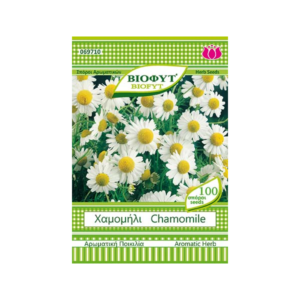
Chamomile
ChamomileChamomile, the beautiful plant with its characteristic aroma and unique beneficial properties. Chamomile is a favorite herb found naturally in the Greek countryside and often picked to be enjoyed as a relaxing tea. All of us chamomile fans can grow it in the garden, as well as in a pot in our yard or balcony, to make wonderful drinks at home. Chamomile is a low-growing, low-maintenance herbaceous plant that is extremely easy to grow. In addition to the beneficial properties it has at our disposal and our health, chamomile also has a special decorative value due to the impressive numerous small flowers with white petals and a characteristic yellow color in the center of the flower that resemble small daisies. There are 2 main varieties of chamomile, the German or wild chamomile, an annual or biennial plant that is taller and the Roman or tame or garden chamomile that is shorter growing and perennial. Let’s see what care chamomile needs to grow it in the garden and in a pot on our balcony and to enjoy beautiful flowers and healthy drinks at home.

Chervil
ChervilChervil (Anthriscus cerefolium): Anthriscus cerefolium is an aromatic plant and is closely related to parsley. Grows to a height of 50cm. It has flat lacy leaves, which have an anise-like aroma. Light green color that gradually turns red brown as the plant matures. Blooms in mid-summer.
