


Carnation Double

Carnation Double
Carnations grow best in bright and sunny places, where they give us many flowers. It is not afraid of winter and is a cold-resistant plant, as it can withstand sub-zero temperatures. On the contrary, the very hot and dry summers bother her. Temperatures above 35 degrees can weaken the plant and dry it out. The carnation prefers rich, fertile soil with good water drainage, as it is sensitive to excessive moisture and its roots can rot.
Carnations have moderate watering needs. During the spring and autumn, we water the carnation twice a week, while in the winter the watering becomes more sparse. During the summer months and in hot conditions, especially when in small pots, the carnation needs more frequent watering, at least every two days, to cope with the very high temperature levels. Because carnations are sensitive to soil moisture, water only after checking that the soil is dry.
More Products

Euphorbia
EuphorbiaEuphorbia lactea cristata, is an easy-to-grow succulent, resulting from the grafting of two species. That is, two plants in one! Its upper part is Euphorbia lactea and its color is silver-grey, which can turn reddish if the plant is happy in its environment. Its lower part is usually Euphorbia neriifolia. Its shape resembles a coral and resulted from a normal mutation of Euphorbia lactea and is also known as Coral plant. Prefer bright spots in the growing area. With gradual acclimatization, it can also live in direct sunlight.

Primula
PrimulaThe primrose is the first flower to bloom in winter! Although a low-growing herbaceous perennial flower, the primrose is mainly planted as an annual ornamental and gives us its wonderful flowers from early January to late spring. The primula has characteristic lanceolate foliage that grows in the form of a rosette and is an ideal plant to plant in a pot on the balcony, as well as in the garden to create impressive color compositions. The name primrose comes from Latin and means first, confirming its early flowering in the heart of winter. There are, of course, some varieties of primrose that bloom in the autumn months. The leaves of the primrose resemble lettuce leaves, which is why many call it “lettuce”. There are many types of primroses with a wide variety of colors to choose from, from white, red, purple, yellow, pink, orange, blue, as well as striking bi-color varieties that have been created in recent years.
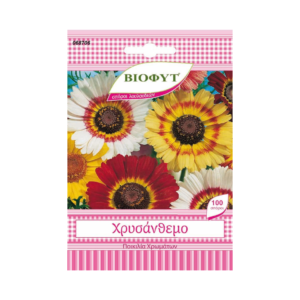
Chrysanthemum
ChrysanthemumChrysanthemum, a perennial plant with abundant flowering and beautiful daisy-like flowers in wonderful colors. Chrysanthemums are among the most popular flowers that bloom in the autumn season and belong to the same family as other favorite flowers such as dimorphotheca, silver marigold, asteraceae, marigold and gerbera. The chrysanthemum is native to Southeast Asia and China.
The seeds are planted in late spring and summer.
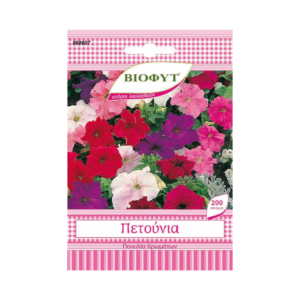
Petunia
PetuniaPetunias have compact, lush vegetation and fast growth, ideal for planting in flower beds and pots without needing too much care. They are particularly popular for their abundant flowering which, with proper care, lasts from early spring to late autumn. Petunia flowers, depending on the variety, can reach a size of 10-15 centimeters and we can choose between dozens of color combinations. There are many different species and varieties of petunias to plant in the garden and in pots. Petunias are divided into three main categories: a) large-flowered varieties of petunias (grandiflora type) with larger flowers, b) multi-flowered varieties (mutliflora type) with more medium-sized flowers and c) thousand-flowered varieties (milleflora type) with numerous small flowers

Snapdragon Giant
Snapdragon GiantThe Snapdragon, a favorite ornamental plant with wonderful flowers, is planted in the spring and is a characteristic plant of the Mediterranean, with rich vegetation. We will find Snapdragon in dwarf varieties from 20-40 cm, medium height from 40-60 cm and tall varieties from 60-120 cm. Although a perennial plant, it is usually planted as an annual in gardens and in pots on the balcony to give us rich flowering and impressive color combinations. Snapdragon thrive in full sun, although they can adapt and thrive even in shady areas.

Pepper Decorative
Pepper DecorativePeppers, the vegetable with the unique taste and the most colors than any other vegetable! Peppers are a key ingredient of Mediterranean cuisine, combining a unique taste, crunchy texture and characteristic aroma. The pepper crop reaches a height of about 1 meter and, depending on the variety, forms fruits in various shapes, from oblong to rounder with bright colors such as green, yellow, orange and red. The fruit of the pepper has a very important nutritional value as it contains many vitamins and antioxidants, very beneficial for our health. At the same time, it has a low fat content and is therefore suitable for weight loss diets. The pepper plant belongs to the same family as the tomato and eggplant, the Solanaceae family, and they are native to Central and South America. Pepper cultivation usually begins in the spring. It is a relatively easy crop that with proper care gives us many fruits to enjoy in the summer. And if we don’t have space available in the garden, we can grow peppers in pots on the balcony or in our yard.
