


Pumpkin Large

Pumpkin Large
Before planting pumpkin seeds, you should let them soak in warm water overnight. For cultivation, you need a container with a diameter of 10 cm to 12 cm. Two pumpkin seeds are planted per container. To do this, the pot is filled with soil one finger’s width below the rim. With the pointed end down, the seeds are pressed about two centimeters deep into the soil. The container is then placed on the windowsill and the first shoots will begin to appear after just a few days. The optimum temperature for the germination of pumpkin plants is 20°C to 25°C. To grow properly, it is important that the young plants are in an environment with constant warmth and enough light. As soon as the first true leaves appear after the vegetative leaves, and these have grown to the edge of the container, the weaker of the two seedlings is cut. Only the strongest plant is allowed to grow so that it can be placed outside in the garden later. But of course, both seedlings can remain in the container to be planted outside later.
Pumpkins can be harvested in early autumn. Fruit maturity is easy to determine. Just hit the hard shell. If the pumpkin sounds hollow, it is ready to harvest. All fruit should be harvested no later than before the first frost.
More Products

Borloto beans
Borloto beansThere are many popular native and traditional bean cultivars, both low and climbing, to choose from. Most growers prefer fresh bean varieties that do not have fiber, as they are more pleasant to eat. We should note that the dry bean varieties have a harder shell and more fiber. Well-known varieties of fresh beans are chauli, terli, broad bean (black-eyed), broad bean (snake bean), mullets (beads), canary beans (yellow beans), bulgara (early mullet), zargana, climbing mullet, while in some regions we will meet other interesting local varieties. An excellent traditional variety of dry beans are the giants of Prespa. It is worth noting that the climbing bean varieties are much more productive than the low varieties, while at the same time they have a longer production period, although they take longer to enter production than the low ones.
Bean cultivation needs fertile soil, rich in organic matter and with good drainage to have good growth and fruiting. When preparing the soil for cultivation, we first plow the field to make the soil sufficiently loose, as it is necessary for the formation of a rich and strong root system of the bean. Then, before planting the bean, we incorporate enough compost, digested manure and organic manure to enrich the soil with organic matter and nutrients.

Celery aromatic
Celery aromaticCelery varieties, depending on the part of the plant for which they are grown, are divided into two main categories: a) leafy ones that have rich foliage vegetation and b) rhizomes that have less growth of the above-ground part of the plant and more root growth. The best-known varieties are the traditional variety of celery, the variety of celery and the variety of celeriac, which have the following characteristics: Common variety of celery: Traditional local leafy variety of celery with thin stems and leaves that have a strong aroma and taste Celery variety: Classic leafy variety of celery with thick crisp stems that reach a height of up to one meter and large leaves but not as strongly scented as the common variety. Celery root variety: Characteristic variety of root celery eaten for its large round root, fresh or cooked in salads and soups.


Fennel
FennelFennel belongs to the apiaceae family. The root is white and penetrates to a great depth and the shoot is upright, green and cylindrical. The main part of the plant is its lower part, which is the pseudobulb of the fennel and is basically a thickening of the leaves at their base. The flowers are small and the fruits are 5 mm in diameter, oblong with shades of green and light grey-brown.

Chicory
ChicoryWhat are the most popular radish varieties to grow? There are many species and varieties of radish to choose from and grow. First, the wild radish with its bitter taste and characteristic green jagged leaves that turn red at the base. Stamnagathi is also a variety of wild radish. And then there is the tame radish with the upright, wider leaves, lighter at the base and with less bitterness. Also, the Italian radish with its upright toothed leaves, spicy bitter taste and many harvests. Let’s not forget radicchio, the radish variety with crimson leaves and white nerves that close like lettuce leaves. Radizio has a strong spiciness when eaten raw that fades with cooking. Radish is a horticultural plant that loves the cold environment and that is why it is planted in the autumn season when we have low temperatures, humidity and few hours of daily sunshine. After all, at high temperatures, the radish blooms prematurely and is unsuitable for consumption. We plant radishes in sunny or semi-shady places and we prefer rich, fertile and cool soils that ensure good drainage. If we plant in the ground, we incorporate organic matter in the form of compost and digested manure for better root development. To plant it in a pot, we use potting soil special for horticulture, rich in organic matter and nutrients, and place the pot on a balcony with western or eastern exposure for the radish culture to thrive.
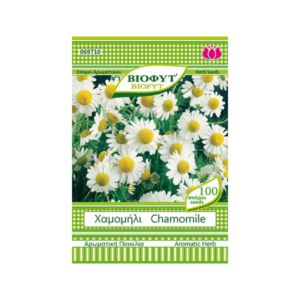
Chamomile
ChamomileChamomile, the beautiful plant with its characteristic aroma and unique beneficial properties. Chamomile is a favorite herb found naturally in the Greek countryside and often picked to be enjoyed as a relaxing tea. All of us chamomile fans can grow it in the garden, as well as in a pot in our yard or balcony, to make wonderful drinks at home. Chamomile is a low-growing, low-maintenance herbaceous plant that is extremely easy to grow. In addition to the beneficial properties it has at our disposal and our health, chamomile also has a special decorative value due to the impressive numerous small flowers with white petals and a characteristic yellow color in the center of the flower that resemble small daisies. There are 2 main varieties of chamomile, the German or wild chamomile, an annual or biennial plant that is taller and the Roman or tame or garden chamomile that is shorter growing and perennial. Let’s see what care chamomile needs to grow it in the garden and in a pot on our balcony and to enjoy beautiful flowers and healthy drinks at home.
