


Parsley Broadleaf

Parsley Broadleaf
Parsley is one of the most favorite herbs that we grow in the garden and also in a pot on our balcony. It stands out for its wonderfully aromatic leaves that we cut fresh to use in salads, in pies and in special cooking recipes. Although it is a biennial vegetable, parsley is usually grown as an annual plant. Parsley has a high nutritional value, as it has a high content of antioxidants and vitamins. Parsley needs fertile soil with good drainage and rich in nutrients, so we enrich the soil we have with compost, manure and organic fertilizer to improve its fertility. Parsley prefers cool weather, in sunny places with temperatures of 10-20°C. During the summer season, we should secure semi-shady places for the parsley, in order for it to have better growth and not to develop premature flowering shoots.
Parsley needs frequent watering in small amounts at a time, avoiding excess moisture that can cause the parsley leaves to turn brown and rot. So we water every 2-3 days during the spring and autumn, while in the summer we make sure to water more regularly. Watering the plants on hot summer days can be done daily to cope with the high temperatures that can also cause drying of the leaves.
More Products

Sage
SageSage is quite a hardy plant and grows in a variety of soils, even dry, barren and stony soils. Sage grows best in sandy, calcareous soils with very good drainage that warm up in early spring. Sage is resistant to both low and high temperatures, meaning we can plant it in hot and cold areas. Prefers places with sun both in the garden and on the balcony.
When planted in the shade, it shows stunted growth and can show rot in the shoots and the root. Incorporating organic matter in the form of digested manure and compost when planting sage is beneficial for its growth.

Cucumber
CucumberCucumber is a thick, ground-growing annual vine that grows on scaffolding or any other supporting framework, wrapping thin, spiraling stems around the nerve. The plant has large, spiny, hairy triangular leaves that form a canopy over the fruits, and yellow flowers that are mostly either male or female. Female flowers are identified by the swollen ovary at the base, which will become the edible fruit.
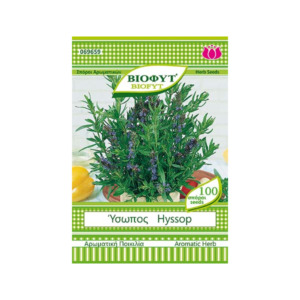
Hyssop
HyssopHyssop is a low shrub that reaches 60 cm in height. Its leaves are lanceolate without a stem and its flowers are dark blue with purple stamens. It has a strong clean and sweet smell with touches of honey aroma. The top note of its essential oil is camphorous and in its middle notes, a warm spice scent lingers as an impression. The color of the essential oil is yellow-green.

Chicory
ChicoryWhat are the most popular radish varieties to grow? There are many species and varieties of radish to choose from and grow. First, the wild radish with its bitter taste and characteristic green jagged leaves that turn red at the base. Stamnagathi is also a variety of wild radish. And then there is the tame radish with the upright, wider leaves, lighter at the base and with less bitterness. Also, the Italian radish with its upright toothed leaves, spicy bitter taste and many harvests. Let’s not forget radicchio, the radish variety with crimson leaves and white nerves that close like lettuce leaves. Radizio has a strong spiciness when eaten raw that fades with cooking. Radish is a horticultural plant that loves the cold environment and that is why it is planted in the autumn season when we have low temperatures, humidity and few hours of daily sunshine. After all, at high temperatures, the radish blooms prematurely and is unsuitable for consumption. We plant radishes in sunny or semi-shady places and we prefer rich, fertile and cool soils that ensure good drainage. If we plant in the ground, we incorporate organic matter in the form of compost and digested manure for better root development. To plant it in a pot, we use potting soil special for horticulture, rich in organic matter and nutrients, and place the pot on a balcony with western or eastern exposure for the radish culture to thrive.

Thyme
ThymeThyme is an aromatic low shrub, a typical plant found in the countryside of our country. Thyme has a creeping but also upright growth and reaches a height of up to 40 cm. There are many varieties of thyme that we can grow. A special and hardy variety of thyme is lemon thyme, the leaves of which have a strong lemon aroma.

Strawberry
StrawberryStrawberry, the favorite fruit of young and old with its unique juicy taste. The best way to enjoy the most delicious strawberries, full of rich aroma, is to grow our own strawberries in the garden or on the balcony. Strawberries are very healthy and have significant nutritional value. They are rich in vitamin C, potassium, phosphorus and calcium, while at the same time they offer significant antioxidant activity. Strawberries are the ideal fruit for novice gardeners of all ages, as they don’t require too much care, can be grown in a pot or in a flower bed, and each plant gives us enough fruit. The strawberry plant is a perennial and herbaceous that spreads on the ground and climbs. The strawberry has a central stem, of low height, from which the leaves, flowers and fruits that are formed in spring and summer emerge. Strawberry cultivation lasts about 3-4 years before the productivity of the plants starts to decrease significantly and we will have to replace the crop by planting new strawberry plants to ensure new strawberry plants.
