


Four o’clock Flower

Four o’clock Flower
An ornamental plant even for its leaves. Flowers open on cloudy days. For cultivation, in groups or individually. It is 70 cm tall. It appreciates fresh soil, but be well drained, fertile soils, neutral to alkaline.
More Products

Salvia
SalviaSalvia is a perennial herbaceous plant, cultivated as an annual. It is also called “fire” because of the arrangement and crimson color of its flowers. It belongs to the Labiatae family. The genus Salvia includes about 500 species of plants. Among them is the Mediterranean aromatic sage S. officinalis. Many varieties and hybrids have been created including Salvia x superba with its impressive purple-blue flowers. Salvia is native to Brazil and remains in bloom throughout summer and fall. Its decorative value is due to the rich flowering but also to the contrast created by the red flowers with the lively green foliage. It is planted in groups in rock gardens, lawns, flower beds and plant containers, alone or in combination with other annual plants. The combination of salvia and yellow amber is excellent!

Pepper Decorative
Pepper DecorativePeppers, the vegetable with the unique taste and the most colors than any other vegetable! Peppers are a key ingredient of Mediterranean cuisine, combining a unique taste, crunchy texture and characteristic aroma. The pepper crop reaches a height of about 1 meter and, depending on the variety, forms fruits in various shapes, from oblong to rounder with bright colors such as green, yellow, orange and red. The fruit of the pepper has a very important nutritional value as it contains many vitamins and antioxidants, very beneficial for our health. At the same time, it has a low fat content and is therefore suitable for weight loss diets. The pepper plant belongs to the same family as the tomato and eggplant, the Solanaceae family, and they are native to Central and South America. Pepper cultivation usually begins in the spring. It is a relatively easy crop that with proper care gives us many fruits to enjoy in the summer. And if we don’t have space available in the garden, we can grow peppers in pots on the balcony or in our yard.

Basil Red
Basil RedThere are many types and varieties of basil to choose from. We come across hundreds of varieties of basil, others with smaller or larger leaves, with different colors, tastes and aromas. It is important to mention that most varieties of basil are annuals while there are also some perennials. Depending on our preferences, we can choose curly, broad-leaved, Genovese, nightshade, red (purple), saint or tree basil.
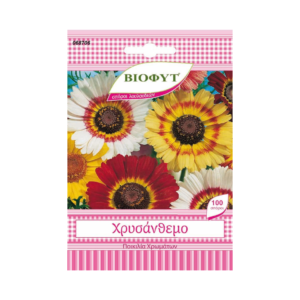
Chrysanthemum
ChrysanthemumChrysanthemum, a perennial plant with abundant flowering and beautiful daisy-like flowers in wonderful colors. Chrysanthemums are among the most popular flowers that bloom in the autumn season and belong to the same family as other favorite flowers such as dimorphotheca, silver marigold, asteraceae, marigold and gerbera. The chrysanthemum is native to Southeast Asia and China.
The seeds are planted in late spring and summer.

Cactus
CactusCacti need full sun exposure, with very few exceptions, and a long warm season exceeding 6 months to grow. The intense activity of the cacti takes place during the spring and summer period, during which, in addition to growth, they also give their unique flowering. As for winter, a period of dormancy, cacti seek temperatures of 5-15°C, although some of them can withstand sub-zero temperatures for a while. Cacti need coarse, sandy, draining soil to grow. An ordinary general-purpose potting soil is not suitable for cacti, as it retains a lot of moisture. That is why we use specialized potting soil for cacti enriched with nutrients. Cacti definitely need fertilization, especially during the spring and summer when they do most of their growth. Specialized fertilizers for cacti, water-soluble with enough trace elements, are needed to improve growth and give their wonderful flowering. We add water-soluble fertilizer to the cacti twice a month for the spring and summer periods.

Snapdragon Giant
Snapdragon GiantThe Snapdragon, a favorite ornamental plant with wonderful flowers, is planted in the spring and is a characteristic plant of the Mediterranean, with rich vegetation. We will find Snapdragon in dwarf varieties from 20-40 cm, medium height from 40-60 cm and tall varieties from 60-120 cm. Although a perennial plant, it is usually planted as an annual in gardens and in pots on the balcony to give us rich flowering and impressive color combinations. Snapdragon thrive in full sun, although they can adapt and thrive even in shady areas.
