


Chives

Chives
Chives thrive in fertile soils, rich in organic matter and with very good drainage. It seeks a cool environment, it is resistant to cold and in sunny places it shows better growth and production, however, excessive moisture tends to cause it to rot in the root. Chives are propagated by seed. We can plant the chives directly by sowing in the field as long as when it reaches a growth of 10-15 cm we thin them at distances of 20-30 cm. If we get ready-made plants from a nursery, we plant them at suitable planting distances of 30-40 cm between plants and 50-60 cm between rows. To plant the chives on the balcony, choose a pot with a diameter of 30 cm and add general-purpose potting soil, enriched in nutrients, that ensures good drainage.
Chives love a cool environment, so we water regularly, especially in spring and summer in order not to let the soil dry out for too long. When preparing the soil before planting, we add manure and compost to enrich the soil with organic matter and nutrients. In addition, once a month we incorporate a complete organic fertilizer so that the chives have rich green foliage. Regarding the treatment of fungal diseases as well as the insects of meligra and the thrips that attack the chives, we spray preventively with a solution of copper and potassium salt soaps every 2 weeks.
More Products
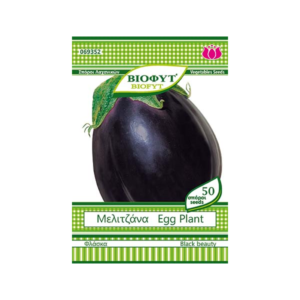
Eggplant Flask
Eggplant FlaskEggplant, the summer’s favorite vegetable! Eggplant is one of the main ingredients of the Mediterranean cuisine that we enjoy in unique summer recipes, from the world-famous moussaka, to the wonderful shoes and the Asia Minor imam baildi. Eggplant is a vegetable with high nutritional value that contains many antioxidants and vitamins. It is eaten mainly grilled, fried but also stewed. We avoid eating eggplant raw, because of its bitter taste, as well as the solanine, a toxic substance it contains when harvested prematurely.
The eggplant crop grows to a height of about 80-90 centimeters and usually does not need subtiling. Eggplant leaves have a smooth upper surface and are smooth while the underside is relatively fluffy. It is planted in the spring and forms characteristic purple flowers that give us the fruits in the summer.
There are many known varieties and hybrids of eggplant to grow. It is important to choose eggplant varieties from our own seed that we keep, so that we know the special characteristics of each variety and how it adapts to the conditions of our region. Among the traditional and local eggplant varieties, we distinguish the Lagada eggplant variety with its long, narrow purple fruits, the purple flask eggplant used in stuffed foods, as well as the teardrop eggplant with its characteristic shape. The two-colored Tsakonian eggplant with its white and purple stripes is also unique and particularly popular and does not taste bitter. Also, the Santorini eggplant is a very distinctive variety with impressive white round fruits and a delicious sweet taste that is not bitter.
Eggplant cultivation grows best in areas with a warm climate. It is worth mentioning that the eggplant needs more heat than the tomato crop and the pepper crop, as well as being much more sensitive to low temperatures and frost. Eggplant planting takes place from April onwards, when the temperature has risen noticeably. Eggplant grows in loose, fertile soils that have good drainage to remove excess water. When preparing the soil for cultivation and before planting the eggplant, we plow the garden and incorporate enough organic matter into the planting pits in the form of compost and digested manure, as well as complete organic fertilizer.

Chervil
ChervilChervil (Anthriscus cerefolium): Anthriscus cerefolium is an aromatic plant and is closely related to parsley. Grows to a height of 50cm. It has flat lacy leaves, which have an anise-like aroma. Light green color that gradually turns red brown as the plant matures. Blooms in mid-summer.

Celery
CeleryCelery varieties, depending on the part of the plant for which they are grown, are divided into two main categories: a) leafy ones that have rich foliage vegetation and b) rhizomes that have less growth of the above-ground part of the plant and more root growth. The best-known varieties are the traditional variety of celery, the variety of celery and the variety of celery which have the following characteristics: Common variety of celery: Traditional local leafy variety of celery with thin shoots and leaves that have a strong aroma and flavor Celery variety: Classic leafy variety of celery with thick, crunchy stems that reach a height of up to one meter and large leaves that do not have as strong a scent as the common variety. Celery root variety: Characteristic variety of root celery eaten for its large round root, fresh or cooked in salads and soups.

Rocket Salad
Rocket SaladRocket Salad, one of the most aromatic and spicy herbs in the garden, with the unique taste that we enjoy in green salads and in cold sandwiches together with lettuce, spinach and Italian parmesan! In recent years, arugula has been particularly popular and is planted in many gardens during autumn and winter, as its cultivation presents no difficulties. And if we don’t have a garden, it doesn’t matter! Growing arugula in a pot is so easy that it’s an ideal starter for novice gardeners, as well as young children taking their first steps into gardening. There are many varieties of arugula to choose from, with more aromatic or spicier flavors. We will also find broad-leaved varieties of arugula with lush vegetation, as well as varieties with a special red-green foliage.

Chard
ChardThe chard, the beet’s cousin! Swiss chard is not grown for its underground part, the root like beetroot, but for its tasty leaves, which we eat cooked or boiled in various recipes. A fall planting vegetable, Swiss chard is an easy crop with no particular requirements, and very healthy as it helps regulate sugar. It is grown as an annual vegetable, as it blooms in the second year. There are many varieties of chard, with light green to dark green leaf color and red or white stems and veins, depending on the variety.
Varieties of Swiss chard with red veins make them visually similar to beets. Note that due to its impressive foliage, the chard also adds decorative value to our autumn vegetable garden. The chard prefers cool weather. Although it does not tolerate high temperatures, the chard seeks sunny or semi-dark places, while it is also relatively resistant to light frost. It wants deep fertile soils, enriched in organic matter that also have good drainage.

Oregano
OreganoOregano does not have special soil requirements, as long as it has very good drainage to remove water. It is cultivated, even in very poor, dry and stony soils. Oregano gives us lush vegetation and flowering when planted in sunny positions. It is resistant to heat during the summer and relatively resistant to frost in winter. To plant oregano in a pot, place it on a west or south facing balcony. For planting in a rock garden, oregano pairs well with marjoram and thyme, which have similar care requirements.
