


Chicory Red Italian

Chicory Red Italian
Chicory is a horticultural plant that loves the cold environment and that is why it is planted in the autumn season when we have low temperatures, humidity and few hours of daily sunshine. After all, at high temperatures, the radish blooms prematurely and is unsuitable for consumption. We plant radishes in sunny or semi-shady places and we prefer rich, fertile and cool soils that ensure good drainage. If we plant in the ground, we incorporate organic matter in the form of compost and digested manure for better root development. To plant it in a pot, we use potting soil special for horticulture, rich in organic matter and nutrients, and place the pot on a balcony with western or eastern exposure for the radish culture to thrive.
The radish does not have excessive water requirements, however we must keep its soil relatively moist. After all, the autumn rains also help with watering during the growing season. However, it will need frequent and constant watering at the beginning of spring when the temperature rises significantly. For fertilizing the radish, in addition to incorporating organic matter during planting, it is good to add organic nitrogen fertilizer 20-30 days after germination with a repetition once a month, especially if we carry out many harvests.
More Products

Borloto beans
Borloto beansThere are many popular native and traditional bean cultivars, both low and climbing, to choose from. Most growers prefer fresh bean varieties that do not have fiber, as they are more pleasant to eat. We should note that the dry bean varieties have a harder shell and more fiber. Well-known varieties of fresh beans are chauli, terli, broad bean (black-eyed), broad bean (snake bean), mullets (beads), canary beans (yellow beans), bulgara (early mullet), zargana, climbing mullet, while in some regions we will meet other interesting local varieties. An excellent traditional variety of dry beans are the giants of Prespa. It is worth noting that the climbing bean varieties are much more productive than the low varieties, while at the same time they have a longer production period, although they take longer to enter production than the low ones.
Bean cultivation needs fertile soil, rich in organic matter and with good drainage to have good growth and fruiting. When preparing the soil for cultivation, we first plow the field to make the soil sufficiently loose, as it is necessary for the formation of a rich and strong root system of the bean. Then, before planting the bean, we incorporate enough compost, digested manure and organic manure to enrich the soil with organic matter and nutrients.

Thyme
ThymeThyme is an aromatic low shrub, a typical plant found in the countryside of our country. Thyme has a creeping but also upright growth and reaches a height of up to 40 cm. There are many varieties of thyme that we can grow. A special and hardy variety of thyme is lemon thyme, the leaves of which have a strong lemon aroma.
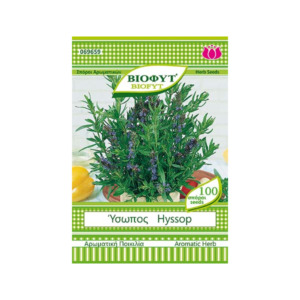
Hyssop
HyssopHyssop is a low shrub that reaches 60 cm in height. Its leaves are lanceolate without a stem and its flowers are dark blue with purple stamens. It has a strong clean and sweet smell with touches of honey aroma. The top note of its essential oil is camphorous and in its middle notes, a warm spice scent lingers as an impression. The color of the essential oil is yellow-green.

Cucumber
CucumberCucumber is a thick, ground-growing annual vine that grows on scaffolding or any other supporting framework, wrapping thin, spiraling stems around the nerve. The plant has large, spiny, hairy triangular leaves that form a canopy over the fruits, and yellow flowers that are mostly either male or female. Female flowers are identified by the swollen ovary at the base, which will become the edible fruit.


Carrot
CarrotCarrot, one of the most delicious and nutritious vegetables that we plant in the spring and autumn season. Famous for the sweet, crunchy and aromatic taste of its fleshy root, the carrot is a favorite food for young and old. It grows in the ground with its leaves protruding above the soil, as is the case with beetroot, radish, onion and garlic. The carrot is eaten fresh in winter salads along with cabbage and lettuce, but also cooked in various recipes, such as in the traditional bean salad. We can also make carrot cake, thanks to its sweet taste. Carrots need relatively cool conditions to grow and perform well, as well as plenty of sunlight. Ideal temperature conditions for carrot cultivation are between 16-18°C. Carrot cultivation is relatively resistant to winter frost, while at high temperatures that exceed 25°C the growth of the carrot root stops, it becomes woody and its color fades.
