


Baby’s Breath

Baby’s Breath
Gypsophila (Gypsophila sp, Caryophyllaceae) is native to Europe and Asia and belongs to the Caryophyllaceae family. The genus Gypsophila includes 80-100 annual or perennial species. The most common species in our country are: G. repens, G. Paniculata, G. Bianca. It is an ideal ground cover plant and a well-known climbing plant used to make wedding flower arrangements. It owes its name to its white flowers.
Soil advice: It is a plant that prefers neutral-alkaline, light, sandy and very well-drained soils. The soil must not retain water and have good ventilation, otherwise the plant will dry out. It is also a plant that can withstand marine areas.
Growth Rate: Shows a fast growth rate.
Light: Grows very well in sunny positions and in partial shade.
Temperature: It can withstand very high temperatures where it increases its flowering, while it cannot withstand low temperatures (up to 38 degrees Celsius).
More Products

Nice of the Day Flower
Nice of the Day FlowerThis plant grows in the spring with beautiful clean green foliage producing beautiful colorful flowers with bright “neon” colors that close at night. Very easy to grow, the beauty of the day is the star in a small garden full of “wild flowers”. The beautiful of the day does not need particularly fertile soils, but sandy and well-drained. It is resistant to the marine climate.
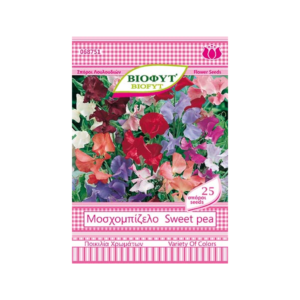
Sweet pea
Sweet peaSweet pea (Lathyrus odoratus, Fabaceae) is a genus of perennial and annual climbing plants native to the south-eastern Mediterranean, Italy, southern France and Greece. The musk pea Lathyrus odoratus is a genus of over thirty perennial and annual aromatic climbing plants, and belongs to the Fabaceae family. It is an annual climbing or erect plant with a height of 60-180 cm and a width of 40-80 cm. The leaves are grey-green, oval 5-7cm long, some have been formed into tendrils for climbing the plant. The flowers of the plant are large, fragrant, butterfly-shaped and grow many together in groups. Creates a rich and deep root system.
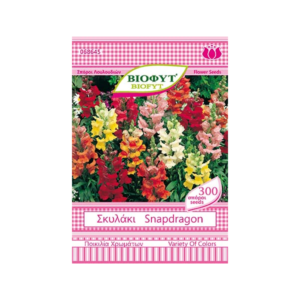
Snapdragon
SnapdragonThe Snapdragon, a favorite ornamental plant with wonderful flowers, is planted in the spring and is a characteristic plant of the Mediterranean, with rich vegetation. We will find Snapdragon in dwarf varieties from 20-40 cm, medium height from 40-60 cm and tall varieties from 60-120 cm. Although a perennial plant, it is usually planted as an annual in gardens and in pots on the balcony to give us rich flowering and impressive color combinations.

Zinnia Giant
Zinnia GiantZinnia is an annual ornamental plant that impresses with the variety of colors and shapes of its flowers. The zinnia has upright strong shoots with a length of half to one meter and large flowers that remain in bloom throughout the summer. We can find tall and short varieties of zinnia and plant them in a pot but also in a rock garden, on the lawn, and in flower beds, in various combinations with other herbaceous flowering plants.


Euphorbia
EuphorbiaEuphorbia lactea cristata, is an easy-to-grow succulent, resulting from the grafting of two species. That is, two plants in one! Its upper part is Euphorbia lactea and its color is silver-grey, which can turn reddish if the plant is happy in its environment. Its lower part is usually Euphorbia neriifolia. Its shape resembles a coral and resulted from a normal mutation of Euphorbia lactea and is also known as Coral plant. Prefer bright spots in the growing area. With gradual acclimatization, it can also live in direct sunlight.
