


Four o’clock Flower

Four o’clock Flower
An ornamental plant even for its leaves. Flowers open on cloudy days. For cultivation, in groups or individually. It is 70 cm tall. It appreciates fresh soil, but be well drained, fertile soils, neutral to alkaline.
More Products

Nice of the Day Flower
Nice of the Day FlowerThis plant grows in the spring with beautiful clean green foliage producing beautiful colorful flowers with bright “neon” colors that close at night. Very easy to grow, the beauty of the day is the star in a small garden full of “wild flowers”. The beautiful of the day does not need particularly fertile soils, but sandy and well-drained. It is resistant to the marine climate.


Phlox
PhloxPhlox (with more common species Phlox drummondii and Phlox paniculata, Polemoniaceae) is a popular herbaceous ornamental that grows mainly as an annual, but in areas with mild winters it can be planted as a perennial. It is a genus of at least forty species and many hybrids have been created. Phlox belongs to the Polemoniaceae family, is native to North America and has historically been a fixture in gardens and parks around the world. The phlox Phlox drummondii is a genus of many species, annual and perennial, and belongs to the Polemoniaceae family. It comes from North America and is a plant with great participation in landscape architecture.
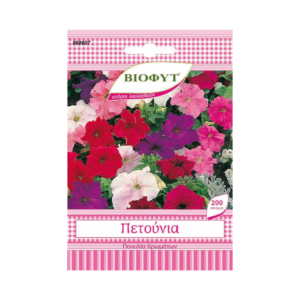
Petunia
PetuniaPetunias have compact, lush vegetation and fast growth, ideal for planting in flower beds and pots without needing too much care. They are particularly popular for their abundant flowering which, with proper care, lasts from early spring to late autumn. Petunia flowers, depending on the variety, can reach a size of 10-15 centimeters and we can choose between dozens of color combinations. There are many different species and varieties of petunias to plant in the garden and in pots. Petunias are divided into three main categories: a) large-flowered varieties of petunias (grandiflora type) with larger flowers, b) multi-flowered varieties (mutliflora type) with more medium-sized flowers and c) thousand-flowered varieties (milleflora type) with numerous small flowers
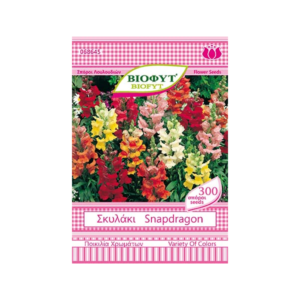
Snapdragon
SnapdragonThe Snapdragon, a favorite ornamental plant with wonderful flowers, is planted in the spring and is a characteristic plant of the Mediterranean, with rich vegetation. We will find Snapdragon in dwarf varieties from 20-40 cm, medium height from 40-60 cm and tall varieties from 60-120 cm. Although a perennial plant, it is usually planted as an annual in gardens and in pots on the balcony to give us rich flowering and impressive color combinations.

Sweet Violet
Sweet VioletSweet Violet is a small, decorative plant, originally from Europe. Famous for the intoxicating scent of its purple and white flowers, it blooms late into winter and is surprisingly suitable for small gardens. Resistant to the cold and lively all year round, it can even be used as a ground cover, under rose bushes or ornamental shrubs.
