


Purslane

Purslane
Purslane, also known as anthrakla, is an annual, native, multi-branched plant of the Mediterranean with characteristic smooth and fleshy shoots. Wormwood grows in cultivated fields and especially in vegetable gardens that are watered in late spring and bears small yellow flowers. Although often considered an unwanted grass (weed) in the garden, buttercup is edible, very tasty and has a high nutritional value.
Because of its high concentration of α-linolenic acid, one of the three omega-3 fatty acids, Purslane, when consumed by humans has significant beneficial benefits in strengthening the immune and cardiovascular systems. Since ancient times, licorice has been used as a laxative, antipyretic, analgesic, tonic and muscle relaxant. It has a high nutritional value, as it is rich in vitamins A, B and C as well as the nutrients potassium, magnesium, calcium and iron.
More Products

Cabbage Chinese
Cabbage ChineseCabbage is a cold season plant and the ideal temperature for its growth is 15-18 degrees Celsius. Cabbages are planted mainly in sunny positions in the fall, although semi-shaded positions are useful in early summer plantings when it is very hot. Cabbage can grow in all types of soil, except very acidic soils. It is important that the soil has good drainage to remove excess water from watering and to ensure good aeration of the roots. For early cabbages we prefer sandy, light warm soils, while for late cabbages we prefer heavier and more fertile soils with good drainage, rich in organic matter. 3. How do we plant the cabbages and at what distances? We can raise cabbage plants from seed to maintain traditional varieties or keep our own seeds from the plants every year. Planting in a nursery takes 4-6 weeks until the young plants are ready for transplanting in the field. Ideal temperatures for seed germination and plant growth are 15-20 degrees Celsius. Alternatively, we can get ready-made cabbage plants from agricultural stores and nurseries in our area. Cabbage is transplanted from mid-August to early November depending on the growing conditions in each region.

Anise
AniseThis small taxon is represented by evergreen trees and shrubs distributed in North America, Mexico, Peru, the West Indies and eastern Asia, with the highest concentration of species occurring in northern Myanmar and southern China.
The best known member of this genus is probably Illicium verum. Other species of this genus are Illicium anistatum, Illicium parviflorum, Illicium angustisepalum A.C. and other.

Oregano
OreganoOregano does not have special soil requirements, as long as it has very good drainage to remove water. It is cultivated, even in very poor, dry and stony soils. Oregano gives us lush vegetation and flowering when planted in sunny positions. It is resistant to heat during the summer and relatively resistant to frost in winter. To plant oregano in a pot, place it on a west or south facing balcony. For planting in a rock garden, oregano pairs well with marjoram and thyme, which have similar care requirements.

Borloto beans
Borloto beansThere are many popular native and traditional bean cultivars, both low and climbing, to choose from. Most growers prefer fresh bean varieties that do not have fiber, as they are more pleasant to eat. We should note that the dry bean varieties have a harder shell and more fiber. Well-known varieties of fresh beans are chauli, terli, broad bean (black-eyed), broad bean (snake bean), mullets (beads), canary beans (yellow beans), bulgara (early mullet), zargana, climbing mullet, while in some regions we will meet other interesting local varieties. An excellent traditional variety of dry beans are the giants of Prespa. It is worth noting that the climbing bean varieties are much more productive than the low varieties, while at the same time they have a longer production period, although they take longer to enter production than the low ones.
Bean cultivation needs fertile soil, rich in organic matter and with good drainage to have good growth and fruiting. When preparing the soil for cultivation, we first plow the field to make the soil sufficiently loose, as it is necessary for the formation of a rich and strong root system of the bean. Then, before planting the bean, we incorporate enough compost, digested manure and organic manure to enrich the soil with organic matter and nutrients.

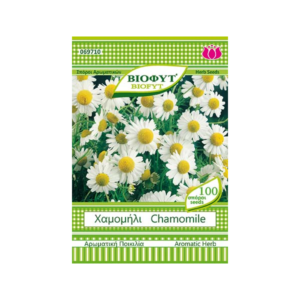
Chamomile
ChamomileChamomile, the beautiful plant with its characteristic aroma and unique beneficial properties. Chamomile is a favorite herb found naturally in the Greek countryside and often picked to be enjoyed as a relaxing tea. All of us chamomile fans can grow it in the garden, as well as in a pot in our yard or balcony, to make wonderful drinks at home. Chamomile is a low-growing, low-maintenance herbaceous plant that is extremely easy to grow. In addition to the beneficial properties it has at our disposal and our health, chamomile also has a special decorative value due to the impressive numerous small flowers with white petals and a characteristic yellow color in the center of the flower that resemble small daisies. There are 2 main varieties of chamomile, the German or wild chamomile, an annual or biennial plant that is taller and the Roman or tame or garden chamomile that is shorter growing and perennial. Let’s see what care chamomile needs to grow it in the garden and in a pot on our balcony and to enjoy beautiful flowers and healthy drinks at home.
