


Cucumber mini

Cucumber mini
There are dozens of cucumber varieties and hybrids that are commercially available and that we can plant. Depending on the size of the fruit, the cucumber varieties are divided into the large-fruited varieties and the small-fruited varieties that, in addition to being fresh, are also used for pickling. A traditional long-fruited variety of cucumber is the Kalybiotiko cucumber, suitable for summer outdoor cultivation that gives very tasty smooth dark green fruits, about 40 cm long. Among the small-fruited varieties, we distinguish the Knossos variety, from the Heraklion region of Crete, with a smooth, dark green, crunchy fruit about 20 centimeters long. Long cucumber, a traditional variety of cucumber.
Cucumber cultivation is demanding on water in order to have good growth and significant fruiting. We water every two to three days during the spring season, so that the soil is kept moist during the growth of the plant. On hot summer days, we water the cucumbers every day or two. It is important to mention that the cucumber needs irrigation with good quality water to have a satisfactory production, as it is sensitive to the high content of the irrigation water, but also the soil in salts.
We prefer to water the cucumber with a drip irrigation system to save water and limit the growth of unwanted weeds in the crop. When watering, be careful not to get the cucumber foliage wet, as this can cause the development of fungal diseases.
More Products
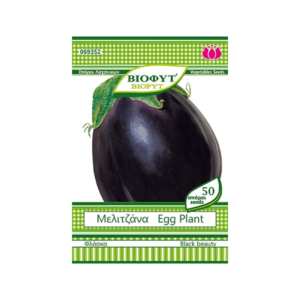
Eggplant Flask
Eggplant FlaskEggplant, the summer’s favorite vegetable! Eggplant is one of the main ingredients of the Mediterranean cuisine that we enjoy in unique summer recipes, from the world-famous moussaka, to the wonderful shoes and the Asia Minor imam baildi. Eggplant is a vegetable with high nutritional value that contains many antioxidants and vitamins. It is eaten mainly grilled, fried but also stewed. We avoid eating eggplant raw, because of its bitter taste, as well as the solanine, a toxic substance it contains when harvested prematurely.
The eggplant crop grows to a height of about 80-90 centimeters and usually does not need subtiling. Eggplant leaves have a smooth upper surface and are smooth while the underside is relatively fluffy. It is planted in the spring and forms characteristic purple flowers that give us the fruits in the summer.
There are many known varieties and hybrids of eggplant to grow. It is important to choose eggplant varieties from our own seed that we keep, so that we know the special characteristics of each variety and how it adapts to the conditions of our region. Among the traditional and local eggplant varieties, we distinguish the Lagada eggplant variety with its long, narrow purple fruits, the purple flask eggplant used in stuffed foods, as well as the teardrop eggplant with its characteristic shape. The two-colored Tsakonian eggplant with its white and purple stripes is also unique and particularly popular and does not taste bitter. Also, the Santorini eggplant is a very distinctive variety with impressive white round fruits and a delicious sweet taste that is not bitter.
Eggplant cultivation grows best in areas with a warm climate. It is worth mentioning that the eggplant needs more heat than the tomato crop and the pepper crop, as well as being much more sensitive to low temperatures and frost. Eggplant planting takes place from April onwards, when the temperature has risen noticeably. Eggplant grows in loose, fertile soils that have good drainage to remove excess water. When preparing the soil for cultivation and before planting the eggplant, we plow the garden and incorporate enough organic matter into the planting pits in the form of compost and digested manure, as well as complete organic fertilizer.

Fennel
FennelFennel belongs to the apiaceae family. The root is white and penetrates to a great depth and the shoot is upright, green and cylindrical. The main part of the plant is its lower part, which is the pseudobulb of the fennel and is basically a thickening of the leaves at their base. The flowers are small and the fruits are 5 mm in diameter, oblong with shades of green and light grey-brown.

Rocket Salad
Rocket SaladRocket Salad, one of the most aromatic and spicy herbs in the garden, with the unique taste that we enjoy in green salads and in cold sandwiches together with lettuce, spinach and Italian parmesan! In recent years, arugula has been particularly popular and is planted in many gardens during autumn and winter, as its cultivation presents no difficulties. And if we don’t have a garden, it doesn’t matter! Growing arugula in a pot is so easy that it’s an ideal starter for novice gardeners, as well as young children taking their first steps into gardening. There are many varieties of arugula to choose from, with more aromatic or spicier flavors. We will also find broad-leaved varieties of arugula with lush vegetation, as well as varieties with a special red-green foliage.
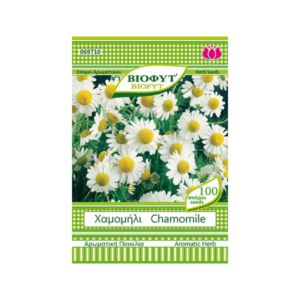
Chamomile
ChamomileChamomile, the beautiful plant with its characteristic aroma and unique beneficial properties. Chamomile is a favorite herb found naturally in the Greek countryside and often picked to be enjoyed as a relaxing tea. All of us chamomile fans can grow it in the garden, as well as in a pot in our yard or balcony, to make wonderful drinks at home. Chamomile is a low-growing, low-maintenance herbaceous plant that is extremely easy to grow. In addition to the beneficial properties it has at our disposal and our health, chamomile also has a special decorative value due to the impressive numerous small flowers with white petals and a characteristic yellow color in the center of the flower that resemble small daisies. There are 2 main varieties of chamomile, the German or wild chamomile, an annual or biennial plant that is taller and the Roman or tame or garden chamomile that is shorter growing and perennial. Let’s see what care chamomile needs to grow it in the garden and in a pot on our balcony and to enjoy beautiful flowers and healthy drinks at home.

Spinach Baby
Spinach BabySpinach needs cool weather and sunny locations to grow and thrive in the fall season. It is also particularly resistant to low winter temperatures. In the spring season, we prefer to plant it in semi-shaded places, as in places with a lot its flowering stem develops prematurely, which stops the vegetation and the production of tender leaves. We plant spinach in fertile, fluffy soil, enriched in nutrients that ensure good growth. Till the soil well before planting and incorporate compost, well-digested manure and complete organic fertilizer.

Strawberry
StrawberryStrawberry, the favorite fruit of young and old with its unique juicy taste. The best way to enjoy the most delicious strawberries, full of rich aroma, is to grow our own strawberries in the garden or on the balcony. Strawberries are very healthy and have significant nutritional value. They are rich in vitamin C, potassium, phosphorus and calcium, while at the same time they offer significant antioxidant activity. Strawberries are the ideal fruit for novice gardeners of all ages, as they don’t require too much care, can be grown in a pot or in a flower bed, and each plant gives us enough fruit. The strawberry plant is a perennial and herbaceous that spreads on the ground and climbs. The strawberry has a central stem, of low height, from which the leaves, flowers and fruits that are formed in spring and summer emerge. Strawberry cultivation lasts about 3-4 years before the productivity of the plants starts to decrease significantly and we will have to replace the crop by planting new strawberry plants to ensure new strawberry plants.
