


Parsley Curly

Parsley Curly
Parsley is one of the most favorite herbs that we grow in the garden and also in a pot on our balcony. It stands out for its wonderfully aromatic leaves that we cut fresh to use in salads, in pies and in special cooking recipes. Although it is a biennial vegetable, parsley is usually grown as an annual plant. Parsley has a high nutritional value, as it has a high content of antioxidants and vitamins. Parsley needs fertile soil with good drainage and rich in nutrients, so we enrich the soil we have with compost, manure and organic fertilizer to improve its fertility. Parsley prefers cool weather, in sunny places with temperatures of 10-20°C.
Parsley needs frequent watering in small amounts at a time, avoiding excess moisture that can cause the parsley leaves to turn brown and rot. So we water every 2-3 days during the spring and autumn, while in the summer we make sure to water more regularly. Watering the plants on hot summer days can be done daily to cope with the high temperatures that can also cause drying of the leaves.
More Products

Borloto beans
Borloto beansThere are many popular native and traditional bean cultivars, both low and climbing, to choose from. Most growers prefer fresh bean varieties that do not have fiber, as they are more pleasant to eat. We should note that the dry bean varieties have a harder shell and more fiber. Well-known varieties of fresh beans are chauli, terli, broad bean (black-eyed), broad bean (snake bean), mullets (beads), canary beans (yellow beans), bulgara (early mullet), zargana, climbing mullet, while in some regions we will meet other interesting local varieties. An excellent traditional variety of dry beans are the giants of Prespa. It is worth noting that the climbing bean varieties are much more productive than the low varieties, while at the same time they have a longer production period, although they take longer to enter production than the low ones.
Bean cultivation needs fertile soil, rich in organic matter and with good drainage to have good growth and fruiting. When preparing the soil for cultivation, we first plow the field to make the soil sufficiently loose, as it is necessary for the formation of a rich and strong root system of the bean. Then, before planting the bean, we incorporate enough compost, digested manure and organic manure to enrich the soil with organic matter and nutrients.


Carrot
CarrotCarrot, one of the most delicious and nutritious vegetables that we plant in the spring and autumn season. Famous for the sweet, crunchy and aromatic taste of its fleshy root, the carrot is a favorite food for young and old. It grows in the ground with its leaves protruding above the soil, as is the case with beetroot, radish, onion and garlic. The carrot is eaten fresh in winter salads along with cabbage and lettuce, but also cooked in various recipes, such as in the traditional bean salad. We can also make carrot cake, thanks to its sweet taste. Carrots need relatively cool conditions to grow and perform well, as well as plenty of sunlight. Ideal temperature conditions for carrot cultivation are between 16-18°C. Carrot cultivation is relatively resistant to winter frost, while at high temperatures that exceed 25°C the growth of the carrot root stops, it becomes woody and its color fades.
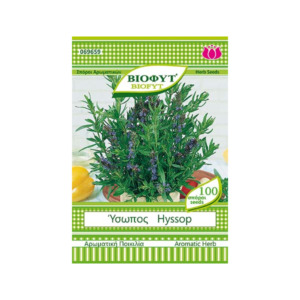
Hyssop
HyssopHyssop is a low shrub that reaches 60 cm in height. Its leaves are lanceolate without a stem and its flowers are dark blue with purple stamens. It has a strong clean and sweet smell with touches of honey aroma. The top note of its essential oil is camphorous and in its middle notes, a warm spice scent lingers as an impression. The color of the essential oil is yellow-green.

Celery aromatic
Celery aromaticCelery varieties, depending on the part of the plant for which they are grown, are divided into two main categories: a) leafy ones that have rich foliage vegetation and b) rhizomes that have less growth of the above-ground part of the plant and more root growth. The best-known varieties are the traditional variety of celery, the variety of celery and the variety of celeriac, which have the following characteristics: Common variety of celery: Traditional local leafy variety of celery with thin stems and leaves that have a strong aroma and taste Celery variety: Classic leafy variety of celery with thick crisp stems that reach a height of up to one meter and large leaves but not as strongly scented as the common variety. Celery root variety: Characteristic variety of root celery eaten for its large round root, fresh or cooked in salads and soups.

Celery
CeleryCelery varieties, depending on the part of the plant for which they are grown, are divided into two main categories: a) leafy ones that have rich foliage vegetation and b) rhizomes that have less growth of the above-ground part of the plant and more root growth. The best-known varieties are the traditional variety of celery, the variety of celery and the variety of celery which have the following characteristics: Common variety of celery: Traditional local leafy variety of celery with thin shoots and leaves that have a strong aroma and flavor Celery variety: Classic leafy variety of celery with thick, crunchy stems that reach a height of up to one meter and large leaves that do not have as strong a scent as the common variety. Celery root variety: Characteristic variety of root celery eaten for its large round root, fresh or cooked in salads and soups.
