


Cabbage Red

Cabbage Red
Cabbage is a cold season plant and the ideal temperature for its growth is 15-18 degrees Celsius. Cabbages are planted mainly in sunny positions in the fall, although semi-shaded positions are useful in early summer plantings when it is very hot. Cabbage can grow in all types of soil, except very acidic soils. It is important that the soil has good drainage to remove excess water from watering and to ensure good aeration of the roots. For early cabbages we prefer sandy, light warm soils, while for late cabbages we prefer heavier and more fertile soils with good drainage, rich in organic matter.
Cabbage has a superficial root system and needs a lot of frequent watering, as it has high water requirements. Especially during the head development stage, constant soil moisture is required in the soil so that cracks are not observed in its formation. In early plantings made in late summer, we make sure to water the young cabbage plants often to avoid problems in their development. For example, the cabbage crop needs watering about every 1-2 days at the end of summer and 2-3 a week during the autumn period. In any case, make sure to water as soon as the soil dries out to ensure cool sprouts that will form a good head.
More Products

Cucumber
CucumberCucumber is a thick, ground-growing annual vine that grows on scaffolding or any other supporting framework, wrapping thin, spiraling stems around the nerve. The plant has large, spiny, hairy triangular leaves that form a canopy over the fruits, and yellow flowers that are mostly either male or female. Female flowers are identified by the swollen ovary at the base, which will become the edible fruit.

Marconi beans
Marconi beansThere are many popular native and traditional bean cultivars, both low and climbing, to choose from. Most growers prefer fresh bean varieties that do not have fiber, as they are more pleasant to eat. We should note that the dry bean varieties have a harder shell and more fiber. Well-known varieties of fresh beans are chauli, terli, broad bean (black-eyed), broad bean (snake bean), mullets (beads), canary beans (yellow beans), bulgara (early mullet), zargana, climbing mullet, while in some regions we will meet other interesting local varieties. An excellent traditional variety of dry beans are the giants of Prespa. It is worth noting that the climbing bean varieties are much more productive than the low varieties, while at the same time they have a longer production period, although they take longer to enter production than the low ones.
Bean cultivation needs fertile soil, rich in organic matter and with good drainage to have good growth and fruiting. When preparing the soil for cultivation, we first plow the field to make the soil sufficiently loose, as it is necessary for the formation of a rich and strong root system of the bean. Then, before planting the bean, we incorporate enough compost, digested manure and organic manure to enrich the soil with organic matter and nutrients.

Borloto beans
Borloto beansThere are many popular native and traditional bean cultivars, both low and climbing, to choose from. Most growers prefer fresh bean varieties that do not have fiber, as they are more pleasant to eat. We should note that the dry bean varieties have a harder shell and more fiber. Well-known varieties of fresh beans are chauli, terli, broad bean (black-eyed), broad bean (snake bean), mullets (beads), canary beans (yellow beans), bulgara (early mullet), zargana, climbing mullet, while in some regions we will meet other interesting local varieties. An excellent traditional variety of dry beans are the giants of Prespa. It is worth noting that the climbing bean varieties are much more productive than the low varieties, while at the same time they have a longer production period, although they take longer to enter production than the low ones.
Bean cultivation needs fertile soil, rich in organic matter and with good drainage to have good growth and fruiting. When preparing the soil for cultivation, we first plow the field to make the soil sufficiently loose, as it is necessary for the formation of a rich and strong root system of the bean. Then, before planting the bean, we incorporate enough compost, digested manure and organic manure to enrich the soil with organic matter and nutrients.

Strawberry
StrawberryStrawberry, the favorite fruit of young and old with its unique juicy taste. The best way to enjoy the most delicious strawberries, full of rich aroma, is to grow our own strawberries in the garden or on the balcony. Strawberries are very healthy and have significant nutritional value. They are rich in vitamin C, potassium, phosphorus and calcium, while at the same time they offer significant antioxidant activity. Strawberries are the ideal fruit for novice gardeners of all ages, as they don’t require too much care, can be grown in a pot or in a flower bed, and each plant gives us enough fruit. The strawberry plant is a perennial and herbaceous that spreads on the ground and climbs. The strawberry has a central stem, of low height, from which the leaves, flowers and fruits that are formed in spring and summer emerge. Strawberry cultivation lasts about 3-4 years before the productivity of the plants starts to decrease significantly and we will have to replace the crop by planting new strawberry plants to ensure new strawberry plants.

Anise
AniseThis small taxon is represented by evergreen trees and shrubs distributed in North America, Mexico, Peru, the West Indies and eastern Asia, with the highest concentration of species occurring in northern Myanmar and southern China.
The best known member of this genus is probably Illicium verum. Other species of this genus are Illicium anistatum, Illicium parviflorum, Illicium angustisepalum A.C. and other.
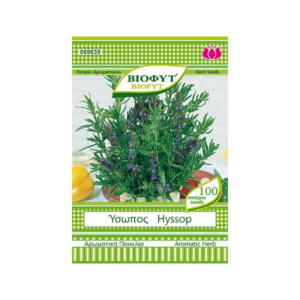
Hyssop
HyssopHyssop is a low shrub that reaches 60 cm in height. Its leaves are lanceolate without a stem and its flowers are dark blue with purple stamens. It has a strong clean and sweet smell with touches of honey aroma. The top note of its essential oil is camphorous and in its middle notes, a warm spice scent lingers as an impression. The color of the essential oil is yellow-green.
