


Alyssum

Alyssum
The Alyssum is an annual flowering plant, of low growth, with small lanceolate leaves of light green color and many small flowers of white, pink or purple color. The Alyssum has abundant and prolonged flowering that lasts from early spring to late autumn. It is an ideal plant for shallow pots and planters, but also for the garden in cluster planting, in rock gardens, for ground cover or for a low flowering border. The Alyssum gr ws best in sunny or semi-shady positions and is resistant to both high and low temperatures. The ideal temperature for the development of the Alyssum is from 16 to 24°C. The Alyssum has no particular requirements regarding the soil, it grows easily even in coastal areas, as long as we choose sunny parts of the garden. The Alyssum is propagated by seeds that can be sown directly in the planting site in March to ensure abundant summer flowering.
The Alyssum needs frequent watering, every two days during the spring season and every day during the hot summer days. Regarding the fertilization of the Alyssum , it needs special attention as excessive fertilization, especially nitrogen, can reduce flowering. In mid-summer, it is necessary to prune the Alyssum, halfway through its growth, removing the dried flowers.
More Products
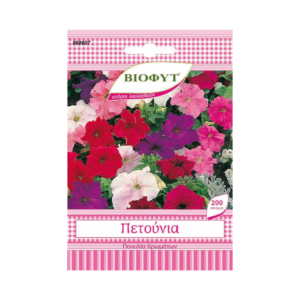
Petunia
PetuniaPetunias have compact, lush vegetation and fast growth, ideal for planting in flower beds and pots without needing too much care. They are particularly popular for their abundant flowering which, with proper care, lasts from early spring to late autumn. Petunia flowers, depending on the variety, can reach a size of 10-15 centimeters and we can choose between dozens of color combinations. There are many different species and varieties of petunias to plant in the garden and in pots. Petunias are divided into three main categories: a) large-flowered varieties of petunias (grandiflora type) with larger flowers, b) multi-flowered varieties (mutliflora type) with more medium-sized flowers and c) thousand-flowered varieties (milleflora type) with numerous small flowers

Cactus
CactusCacti need full sun exposure, with very few exceptions, and a long warm season exceeding 6 months to grow. The intense activity of the cacti takes place during the spring and summer period, during which, in addition to growth, they also give their unique flowering. As for winter, a period of dormancy, cacti seek temperatures of 5-15°C, although some of them can withstand sub-zero temperatures for a while. Cacti need coarse, sandy, draining soil to grow. An ordinary general-purpose potting soil is not suitable for cacti, as it retains a lot of moisture. That is why we use specialized potting soil for cacti enriched with nutrients. Cacti definitely need fertilization, especially during the spring and summer when they do most of their growth. Specialized fertilizers for cacti, water-soluble with enough trace elements, are needed to improve growth and give their wonderful flowering. We add water-soluble fertilizer to the cacti twice a month for the spring and summer periods.


Salvia
SalviaSalvia is a perennial herbaceous plant, cultivated as an annual. It is also called “fire” because of the arrangement and crimson color of its flowers. It belongs to the Labiatae family. The genus Salvia includes about 500 species of plants. Among them is the Mediterranean aromatic sage S. officinalis. Many varieties and hybrids have been created including Salvia x superba with its impressive purple-blue flowers. Salvia is native to Brazil and remains in bloom throughout summer and fall. Its decorative value is due to the rich flowering but also to the contrast created by the red flowers with the lively green foliage. It is planted in groups in rock gardens, lawns, flower beds and plant containers, alone or in combination with other annual plants. The combination of salvia and yellow amber is excellent!


Zinnia Giant
Zinnia GiantZinnia is an annual ornamental plant that impresses with the variety of colors and shapes of its flowers. The zinnia has upright strong shoots with a length of half to one meter and large flowers that remain in bloom throughout the summer. We can find tall and short varieties of zinnia and plant them in a pot but also in a rock garden, on the lawn, and in flower beds, in various combinations with other herbaceous flowering plants.
