


Lemon balm

Lemon balm
Lemon balm is a shrubby aromatic plant found in the region of Southern Europe, the Mediterranean, and Central Asia. Also known as bee herb, lemon balm or “medicine bee”, Lemon balm is fast growing and usually over a meter tall. The leaves of Lemon balm are oval and jagged and give off a mild lemon scent. Lemon balm grows in a variety of soils, although it prefers cool and fertile soils, as long as they are well drained and it prefers sunny positions. It is a plant resistant to high temperatures, however, Lemon balm is relatively sensitive to very low temperatures and freezing temperatures. Because of its fast and dynamic growth, Lemon balm is best planted alone in the pot, while when planted in rock gardens, we choose it in the rear plantings at a distance of at least half a meter from the other aromatic plants.
Lemon balm, in the first stages of growth, will need small and frequent waterings to take root better, while then frequent watering will be required during the summer season. As far as fertilization is concerned, the incorporation of a small amount of organic nitrogen fertilizer or manure, twice in the spring period is imperative.
More Products
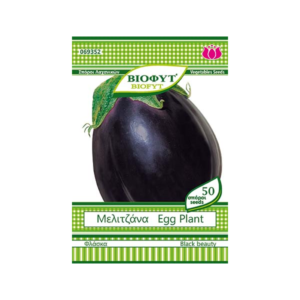
Eggplant Flask
Eggplant FlaskEggplant, the summer’s favorite vegetable! Eggplant is one of the main ingredients of the Mediterranean cuisine that we enjoy in unique summer recipes, from the world-famous moussaka, to the wonderful shoes and the Asia Minor imam baildi. Eggplant is a vegetable with high nutritional value that contains many antioxidants and vitamins. It is eaten mainly grilled, fried but also stewed. We avoid eating eggplant raw, because of its bitter taste, as well as the solanine, a toxic substance it contains when harvested prematurely.
The eggplant crop grows to a height of about 80-90 centimeters and usually does not need subtiling. Eggplant leaves have a smooth upper surface and are smooth while the underside is relatively fluffy. It is planted in the spring and forms characteristic purple flowers that give us the fruits in the summer.
There are many known varieties and hybrids of eggplant to grow. It is important to choose eggplant varieties from our own seed that we keep, so that we know the special characteristics of each variety and how it adapts to the conditions of our region. Among the traditional and local eggplant varieties, we distinguish the Lagada eggplant variety with its long, narrow purple fruits, the purple flask eggplant used in stuffed foods, as well as the teardrop eggplant with its characteristic shape. The two-colored Tsakonian eggplant with its white and purple stripes is also unique and particularly popular and does not taste bitter. Also, the Santorini eggplant is a very distinctive variety with impressive white round fruits and a delicious sweet taste that is not bitter.
Eggplant cultivation grows best in areas with a warm climate. It is worth mentioning that the eggplant needs more heat than the tomato crop and the pepper crop, as well as being much more sensitive to low temperatures and frost. Eggplant planting takes place from April onwards, when the temperature has risen noticeably. Eggplant grows in loose, fertile soils that have good drainage to remove excess water. When preparing the soil for cultivation and before planting the eggplant, we plow the garden and incorporate enough organic matter into the planting pits in the form of compost and digested manure, as well as complete organic fertilizer.

Thyme
ThymeThyme is an aromatic low shrub, a typical plant found in the countryside of our country. Thyme has a creeping but also upright growth and reaches a height of up to 40 cm. There are many varieties of thyme that we can grow. A special and hardy variety of thyme is lemon thyme, the leaves of which have a strong lemon aroma.

Celery aromatic
Celery aromaticCelery varieties, depending on the part of the plant for which they are grown, are divided into two main categories: a) leafy ones that have rich foliage vegetation and b) rhizomes that have less growth of the above-ground part of the plant and more root growth. The best-known varieties are the traditional variety of celery, the variety of celery and the variety of celeriac, which have the following characteristics: Common variety of celery: Traditional local leafy variety of celery with thin stems and leaves that have a strong aroma and taste Celery variety: Classic leafy variety of celery with thick crisp stems that reach a height of up to one meter and large leaves but not as strongly scented as the common variety. Celery root variety: Characteristic variety of root celery eaten for its large round root, fresh or cooked in salads and soups.

Chicory
ChicoryWhat are the most popular radish varieties to grow? There are many species and varieties of radish to choose from and grow. First, the wild radish with its bitter taste and characteristic green jagged leaves that turn red at the base. Stamnagathi is also a variety of wild radish. And then there is the tame radish with the upright, wider leaves, lighter at the base and with less bitterness. Also, the Italian radish with its upright toothed leaves, spicy bitter taste and many harvests. Let’s not forget radicchio, the radish variety with crimson leaves and white nerves that close like lettuce leaves. Radizio has a strong spiciness when eaten raw that fades with cooking. Radish is a horticultural plant that loves the cold environment and that is why it is planted in the autumn season when we have low temperatures, humidity and few hours of daily sunshine. After all, at high temperatures, the radish blooms prematurely and is unsuitable for consumption. We plant radishes in sunny or semi-shady places and we prefer rich, fertile and cool soils that ensure good drainage. If we plant in the ground, we incorporate organic matter in the form of compost and digested manure for better root development. To plant it in a pot, we use potting soil special for horticulture, rich in organic matter and nutrients, and place the pot on a balcony with western or eastern exposure for the radish culture to thrive.

Rocket Salad
Rocket SaladRocket Salad, one of the most aromatic and spicy herbs in the garden, with the unique taste that we enjoy in green salads and in cold sandwiches together with lettuce, spinach and Italian parmesan! In recent years, arugula has been particularly popular and is planted in many gardens during autumn and winter, as its cultivation presents no difficulties. And if we don’t have a garden, it doesn’t matter! Growing arugula in a pot is so easy that it’s an ideal starter for novice gardeners, as well as young children taking their first steps into gardening. There are many varieties of arugula to choose from, with more aromatic or spicier flavors. We will also find broad-leaved varieties of arugula with lush vegetation, as well as varieties with a special red-green foliage.

Cabbage Chinese
Cabbage ChineseCabbage is a cold season plant and the ideal temperature for its growth is 15-18 degrees Celsius. Cabbages are planted mainly in sunny positions in the fall, although semi-shaded positions are useful in early summer plantings when it is very hot. Cabbage can grow in all types of soil, except very acidic soils. It is important that the soil has good drainage to remove excess water from watering and to ensure good aeration of the roots. For early cabbages we prefer sandy, light warm soils, while for late cabbages we prefer heavier and more fertile soils with good drainage, rich in organic matter. 3. How do we plant the cabbages and at what distances? We can raise cabbage plants from seed to maintain traditional varieties or keep our own seeds from the plants every year. Planting in a nursery takes 4-6 weeks until the young plants are ready for transplanting in the field. Ideal temperatures for seed germination and plant growth are 15-20 degrees Celsius. Alternatively, we can get ready-made cabbage plants from agricultural stores and nurseries in our area. Cabbage is transplanted from mid-August to early November depending on the growing conditions in each region.
